Views: 0 Author: Site Editor Publish Time: 2026-07-10 Origin: Site


Hospital laboratories face immense pressure today. Test volumes rise daily, while turnaround time (TAT) demands grow stricter. At the same time, persistent staffing shortages push lab technicians to their limits. Upgrading to a fully automated CLIA analyzer represents a massive capital commitment for any institution. A successful acquisition requires looking closely beyond raw spec sheets. You must carefully evaluate workflow compatibility, system integration capabilities, and long-term clinical reliability. This article provides a strictly objective, procurement-focused framework. We will help you evaluate and select the right chemiluminescence immunoassay analyzer for demanding clinical environments. You will discover how to match throughput to reality, verify test menus, and implement a disciplined procurement process to ensure seamless laboratory operations.
Throughput vs. Reality: Match nominal speed (e.g., a 300 tests/hour CLIA analyzer) against actual clinical workflow, factoring in STAT interruptions and calibration time.
TCO Dominates the Decision: Reagent consumption and maintenance contracts typically overshadow the initial hardware cost within the first 24 months.
Integration is Mandatory: Seamless bidirectional LIS/HIS communication and physical compatibility with Total Laboratory Automation (TLA) tracks are non-negotiable for modern hospitals.
Procurement Discipline: Utilizing a cross-functional weighted scoring matrix and conducting reference site visits mitigates buyer's remorse.
Laboratories must distinguish between theoretical maximum speed and practical daily throughput. Many spec sheets promote peak batch processing speeds. However, clinical reality demands continuous random access. Random access allows technicians to load new samples at any time. You do not need to wait for a previous batch to finish. This flexibility prevents bottlenecks during peak morning hours.
You must evaluate how the machine handles STAT (priority) samples. True clinical efficiency relies on processing urgent requests without disrupting the ongoing queue. A well-designed system pauses routine testing, analyzes the STAT sample, and seamlessly resumes normal operations. You should carefully assess your daily volume. A mid-volume 300 tests/hour CLIA analyzer perfectly fits most core lab needs. Larger regional reference laboratories might require high-volume modules pushing past 1500 tests per day.
Diagnostic accuracy stems directly from the underlying signal detection technology. You should deeply examine the methodology powering the instrument. Advanced systems utilize magnetic separation CLIA combined with highly sensitive photomultiplier tubes (PMTs). Magnetic separation efficiently washes away unbound materials. It drastically reduces background noise. PMTs then capture even the faintest light emissions. This combination offers unparalleled stability and sensitivity for low-concentration analytes.
Furthermore, you must verify the system's anti-interference capabilities. Patient samples are rarely perfect. Laboratories frequently encounter problematic specimens. The analyzer must reliably handle lipemia, hemolysis, and icterus. Robust software algorithms and superior reagent formulations prevent these common issues from skewing patient results.
Automation means more than just running tests. It encompasses the entire pre-analytical phase. You need to assess several automated features before purchasing. True laboratory automation frees your staff for higher-level tasks.
Clot Detection: Automatically flags clotted samples before they clog internal probes.
Liquid Level Sensing: Ensures precise aspiration volumes for both samples and reagents.
Cap-Piercing Capabilities: Eliminates manual tube uncapping, directly reducing biohazard exposure.
Barcode Reading Accuracy: Prevents critical patient identification errors via multi-angle scanners.
These features collectively define "true walkaway time." Walkaway time refers to how long an operator can leave the machine completely unattended. It depends heavily on onboard reagent capacity and bulk cuvette storage. Longer walkaway times drastically improve laboratory productivity.
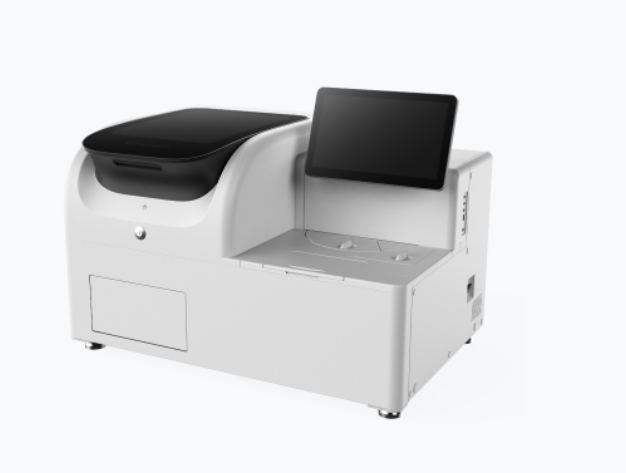
A sophisticated hardware platform provides little value without a comprehensive test menu. You must evaluate the breadth of current assays. Look closely at endocrinology, infectious diseases, cardiac markers, and tumor markers. Consolidating multiple disciplines onto a single platform saves space and simplifies training.
Do not just look at today's menu. Investigate the manufacturer's R&D pipeline. Medical diagnostics evolve rapidly. Ask the vendor what new assays are scheduled for regulatory approval in the next three to five years. A future-proof platform will continuously expand its clinical utility over its operational lifespan.
Procurement teams constantly debate between closed and open systems. Each approach carries specific trade-offs. You must align these traits with your institutional goals.
System Type | Primary Advantages | Potential Drawbacks | Best Clinical Fit |
|---|---|---|---|
Closed Systems | Optimized hardware-reagent synergy, guaranteed assay performance, single-vendor troubleshooting. | Locked into one vendor's pipeline. Less flexibility for niche tests. | High-throughput hospital labs requiring maximum uptime and standardization. |
Open Systems | High flexibility, allows integration of third-party or highly specialized reagents. | Higher risk of calibration errors. Complex troubleshooting across multiple vendors. | Specialized research facilities or labs running rare diagnostic panels. |
Most clinical environments favor closed systems. They deliver optimized reliability. The manufacturer calibrates the hardware and reagents to work together flawlessly. This guarantees assay performance and simplifies regulatory compliance.
Efficient laboratories manage reagents effortlessly. You should look for continuous loading capabilities. Technicians must be able to swap out empty kits without halting patient testing. Refrigerated onboard storage is an absolute necessity. It maximizes reagent stability and extends the onboard shelf life. Furthermore, automated tracking systems should monitor reagent lot expirations and exact remaining volumes. This prevents unexpected test shortages during critical night shifts.
Modern laboratories operate as highly interconnected data hubs. Standalone machines create dangerous data silos. You must confirm compliance with modern communication protocols. HL7, POCT1-A, and ASTM standards are strictly required for bidirectional integration. Bidirectional capability allows the analyzer to pull test orders directly from the Laboratory Information System (LIS) or Hospital Information System (HIS). It then pushes the completed results back automatically.
Furthermore, ensure the software includes robust auto-verification rules. Auto-verification automatically releases normal patient results based on predefined clinical criteria. It holds abnormal results for manual technician review. Coupled with real-time QC monitoring, this software functionality drastically reduces human error and accelerates turnaround times.
Healthcare institutions face stringent regulatory scrutiny. You must verify all necessary approvals for your intended market before finalizing any purchase. Look for FDA clearance, CE-IVD marking, or NMPA certification depending on your region. These credentials ensure the IVD diagnostic analyzer meets strict institutional compliance mandates.
Additionally, check the software for built-in audit trails. Accreditation bodies demand meticulous record-keeping. The system must log every calibration adjustment, reagent lot change, and user login. Comprehensive audit trails effortlessly support CLIA, CAP, or ISO 15189 accreditation inspections. They prove your lab maintains total control over the diagnostic process.
Equipment procurement should never happen in a vacuum. Single-department decisions often lead to operational blind spots. You must include diverse perspectives to cover all clinical and technical angles. Lab directors ensure the test menu meets clinical needs. Bench technicians evaluate daily usability and software ergonomics. Biomedical engineers assess maintenance access and repair complexity. Finally, IT personnel vet cybersecurity protocols and LIS integration requirements.
Sales pitches easily sway emotional buyers. You must remove subjective bias from the RFP process. Create a weighted scoring matrix before reviewing any proposals. Assign priority percentages to specific system features based on your lab's unique pain points.
A typical scoring matrix might look like this:
STAT Handling & Workflow Interruption: 30% weight.
Walkaway Time & Onboard Capacity: 25% weight.
LIS Integration & Software Robustness: 25% weight.
Physical Footprint & Utilities: 20% weight.
This disciplined approach ensures the final decision heavily favors operational reality over flashy but unused features.
Never rely solely on manufacturer-provided calibrators during a product demonstration. Pristine samples always yield perfect results. Instead, test the analyzer using your lab's actual problematic samples. Bring heavily lipemic or icteric specimens. Run known low-concentration patient samples. This stress test reveals the true clinical capability of the instrument under real-world conditions.
Vendor promises only go so far. You must speak directly with peer laboratory managers. Find other hospitals currently using the specific model you intend to buy. Ask them pointed questions about real-world reliability. Inquire about the vendor's actual support responsiveness. Does the service engineer arrive in four hours or four days? A hospital lab analyzer must perform reliably day after day. Peer reviews provide the most honest assessment of equipment durability.
Many hospitals blindly rush toward Total Laboratory Automation (TLA). They fall into a common industry trap. The maxim states: "Automating a poor process only serves to automate a poor process." You must reassess your physical workflows before dropping automated tracks into the lab. Analyze how samples travel from the phlebotomy station to the centrifuge. Eliminate unnecessary manual touchpoints first. A highly efficient manual workflow translates into a flawless automated workflow.
Installing new hardware disrupts daily operations. You must account for the operational downtime required to validate the new instrument. Your team will need to perform extensive correlation studies. They must compare results from the new machine against the legacy system to ensure clinical continuity. Furthermore, you must schedule comprehensive training. Train staff across all shifts, including night and weekend personnel. Poor training directly causes early hardware failures and user-generated errors.
Advanced diagnostic equipment demands specific environmental conditions. Double-check your facility requirements months before the delivery date. Common infrastructure hurdles include:
Electrical Loads: Most systems require dedicated power circuits to prevent voltage spikes.
Water Supply: Ensure your clinical-grade deionized water system meets the specific volume demands.
Climate Control: Assess the HVAC load. High-throughput machines generate significant heat.
Structural Integrity: Verify floor weight-bearing limits for massive floor-standing units.
Addressing these facility needs early prevents disastrous installation delays.
Selecting the right fully automated immunoassay system is a delicate balancing act. You must align clinical precision with operational workflow realities. Focus deeply on how the machine handles STAT interruptions and problematic patient samples. Ensure the pre-analytical automation truly extends walkaway time for your busy technicians.
We urge procurement teams to prioritize long-term vendor partnerships over minor differences in peak hardware throughput. Seek transparent service level agreements. Demand future-proof test menus that will grow with your diagnostic needs. Bidirectional LIS integration and robust audit trails remain non-negotiable for modern compliance.
Do not leave this critical decision to chance. We encourage you to download a comprehensive evaluation checklist to guide your cross-functional committee. Alternatively, contact technical sales today for a customized workflow and throughput analysis tailored specifically to your laboratory.
A: Sequential analyzers process samples in a strict, fixed order. They must finish an entire batch before starting another. Random-access systems allow operators to load new samples continuously at any time. You can safely interrupt the standard queue for priority testing without stopping the machine, maximizing efficiency.
A: A well-engineered system manages STAT samples through dedicated priority lanes. When a STAT sample enters, the analyzer temporarily pauses routine batch processing. It immediately analyzes the urgent sample. Afterward, it seamlessly resumes the standard queue without dropping daily throughput or causing systemic delays.
A: Facilities often need dedicated electrical circuits to prevent voltage drops. You must ensure a steady supply of clinical-grade deionized water. Additionally, structural checks on floor weight-bearing limits and HVAC system upgrades are critical. High-throughput instruments generate substantial heat that standard air conditioning cannot handle.
A: Validation typically takes four to eight weeks. This intensive period includes physical installation, calibrating all assays, and running correlation studies against the legacy system. Staff training across all shifts also occurs during this window to ensure total operational readiness before going live with patient samples.


