Views: 0 Author: Site Editor Publish Time: 2026-07-16 Origin: Site


Diagnostic power is steadily shifting from central laboratories directly to the patient's bedside. Deploying a POCT CLIA analyzer is no longer just a simple clinical upgrade. It is a strategic necessity for reducing Turnaround Time (TAT) and optimizing modern healthcare delivery. Traditional clinical workflows suffer from significant operational friction today. Delayed laboratory results inevitably lead to postponed medical interventions. This delay increases patient attrition and elevates overall treatment costs substantially. Physicians simply cannot afford to wait hours for critical data when lives remain on the line.
This article provides a clear, evidence-based evaluation framework. We help you select and implement point-of-care systems confidently. We balance clinical utility, strict compliance requirements, and true Return on Investment (ROI). You will discover how rapid bedside testing fundamentally reshapes acute care pathways. We also explore how to minimize pre-analytical errors effectively. By understanding these dynamics, you bridge the difficult gap between device portability and central-lab accuracy.
POCT analyzers routinely reduce diagnostic Turnaround Time (TAT) to under 30 minutes, fundamentally altering triage and treatment decisions.
The true financial value of POCT lies in lowering the overall "Cost of Illness" (via reduced hospital stays and fewer follow-up visits), despite higher single-test consumable costs.
Evaluating a rapid CLIA testing platform requires balancing test complexity (CLIA Waived vs. Moderate) with the need for robust Quality Control and seamless LIS/HIS connectivity.
Understanding inherent technical variances—such as whole blood vs. plasma discrepancies—is critical for managing clinical expectations and training.
Clinical leaders must utilize standardized criteria when evaluating bedside diagnostics. The World Health Organization (WHO) created an excellent baseline for this purpose. They originally called it the ASSURED framework. Recently, industry experts updated this standard to REASSURED. This updated model reflects modern technological demands perfectly. It stands for Real-time connectivity, Ease of collection, Affordable, Sensitive, Specific, User-friendly, Rapid, Equipment-free, and Deliverable. These core principles guide hospitals in selecting resilient platforms.
Administrators often fixate solely on the basic cost per test. This narrow financial perspective frequently limits clinical innovation. We must shift our focus to the comprehensive Cost of Illness. Bedside testing often involves higher single-test consumable costs initially. However, it offsets these higher reagent expenses dramatically. Rapid results reduce a patient's overall length-of-stay (LOS) significantly. They lower resource utilization across emergency departments. When you discharge or admit patients faster, you improve bed turnover rates. This efficiency saves hospitals thousands of dollars per patient.
You must also navigate the regulatory context carefully. In the United States, CLIA governs laboratory testing standards. CLIA defines three baseline compliance tiers. These include Waived, Moderate Complexity, and High Complexity testing. The majority of modern outpatient testing platforms target Waived or Moderate classifications intentionally. This strategic design choice minimizes heavy staffing overhead. It allows non-laboratory personnel to operate devices safely.
Chart: CLIA Compliance Tiers Summary | |||
Compliance Tier | Risk Level | Operator Requirement | Typical POCT Use Case |
|---|---|---|---|
Waived | Low risk of erroneous results | Minimal training, no specific degree | Basic glucose, simple pregnancy strips |
Moderate Complexity | Moderate risk, requires careful prep | Documented training, specific QC protocols | Advanced infectious disease panels |
High Complexity | High risk, complex interpretation | Extensive clinical laboratory degree | Rarely performed at the bedside |
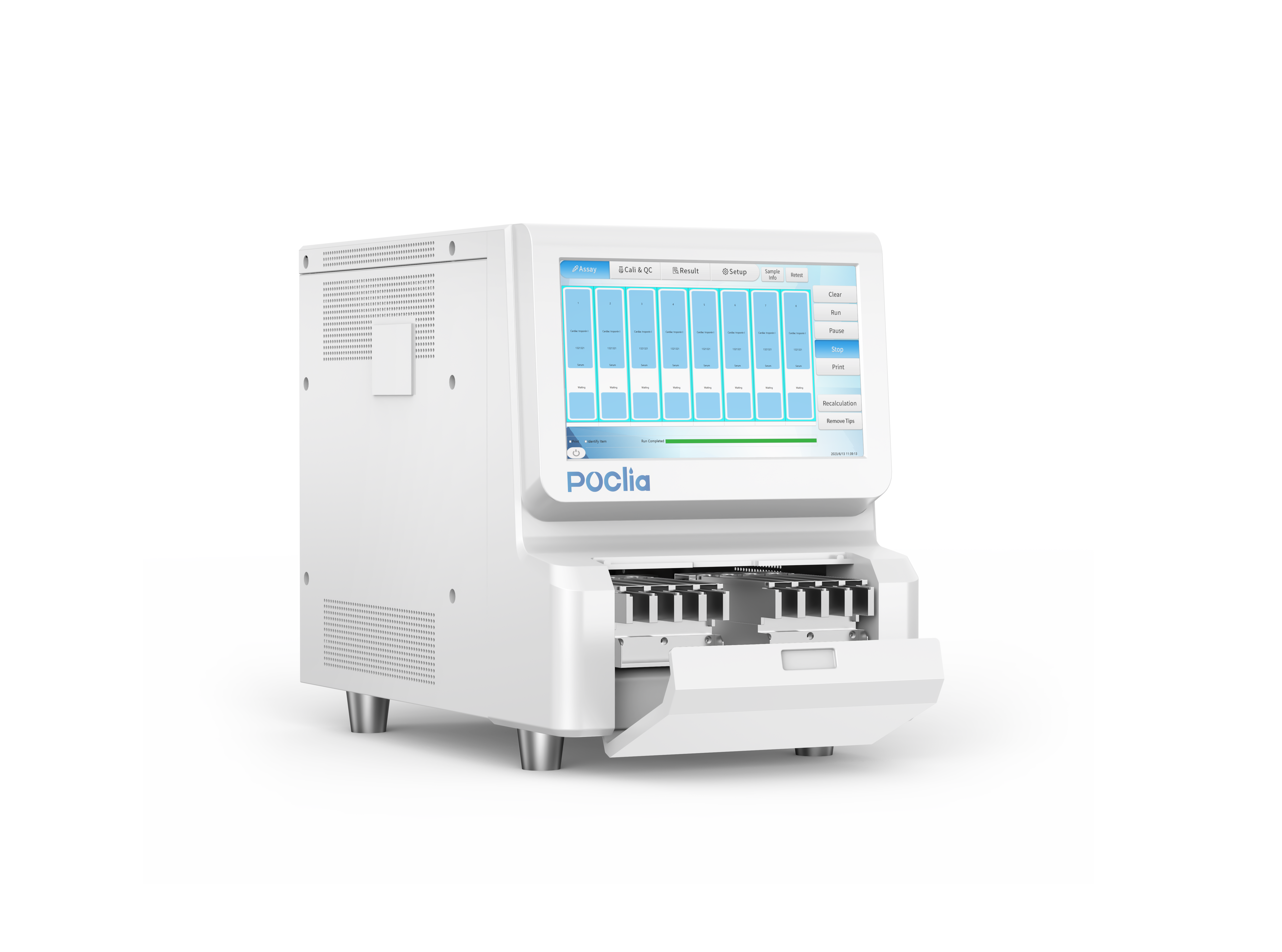
Triage environments demand both exceptional speed and high accuracy. High-stakes settings include emergency rooms, intensive care units, and ambulances. Deploying a reliable point of care immunoassay directly impacts these chaotic workflows. Emergency medical service (EMS) teams benefit immensely from immediate data access. Immediate laboratory values can alter up to 30% of pre-hospital field decisions. Paramedics use this real-time data to reroute ambulances. They transport critical patients directly to specialized cardiac or stroke centers.
Chest pain pathways require rapid assessment to save heart muscle. Suspected myocardial infarctions demand urgent diagnostic clarity. Clinicians use rapid Troponin T and Troponin I assays for this purpose. These bedside tests help rule out heart attacks swiftly. Similarly, rapid D-Dimer testing helps rule out dangerous pulmonary embolisms. This expedites critical care pathways efficiently. Patients receive life-saving interventions exactly when they need them most.
Sepsis and severe trauma present unique diagnostic challenges. Immediate physiological monitoring remains absolutely vital for survival. You cannot wait for central lab transit during hemorrhagic shock.
Lactate monitoring: Assess anaerobic metabolism immediately to determine tissue hypoxia.
Blood Gas analysis: Determine shock severity and respiratory failure instantly.
Electrolyte panels: Catch dangerous potassium imbalances before cardiac arrhythmias occur.
Primary care clinics gain massive advantages from localized diagnostic testing. Chronic disease management represents a major application area. Diabetes care relies heavily on tracking HbA1c levels over time. Point-of-care integration transforms this routine process entirely. Real-time data facilitates immediate, meaningful physician-patient dialogue. Current research shows localized testing reduces required follow-up scheduling. Clinics can cut follow-up visits by up to 80%. It also significantly lowers dangerous hypoglycemic events. You fix medication dosages during a single patient visit.
Infectious disease management also improves drastically. Implementing a versatile primary hospital analyzer supports robust antimicrobial stewardship programs. Clinics use these compact devices for sexually transmitted infections (STIs). They also track seasonal respiratory illnesses like Strep A and influenza.
Immediate infection confirmation prevents unfortunate patient loss-to-follow-up.
Targeted results reduce unnecessary broad-spectrum antibiotic prescriptions by up to 44%.
Local clinics protect community public health much more efficiently.
The patient experience matters deeply in primary care settings. These clinical analyzers effectively expand healthcare access. Community clinics and rural outposts benefit greatly from compact diagnostic devices. They rely heavily on advanced micro-sampling techniques. Taking just 30 µL of capillary blood changes everything. This incredibly low volume improves pediatric and geriatric patient compliance. You eliminate the sheer anxiety of painful venous blood draws.
Selecting the correct hardware defines your long-term clinical success. You must consider core hardware and structural architecture first. Structural design choices heavily influence test reliability in the field. Adopting a robust dual chamber POCT analyzer offers a smart operational strategy. It isolates sensitive reagents effectively during processing. It optimizes sample processing under highly variable environmental conditions. This ensures assay stability across different temperatures, humidity levels, and transport vibrations.
Next, evaluate the device's analyte menu and overall scalability. You need a highly flexible immunoassay POCT analyzer to handle diverse patient populations. Does the platform consolidate different testing panels into a single footprint? Combining cardiac, metabolic, and infectious disease tests saves precious counter space. It also simplifies your staff's mandatory operator training.
Informatics and data management often present a frustrating dilemma. Facilities struggle balancing ultimate portability against reliable connectivity. A truly viable solution features seamless, automatic data integration. Devices must connect via IoT, LIS, or HIS easily. This network integration prevents dangerous offline data loss. It automatically captures valuable billing codes for the finance department.
Artificial intelligence and microfluidics represent the diagnostic future. The industry trajectory points directly toward lab-on-a-chip technologies. Integrated software algorithms enhance test precision substantially. Modern portable devices now match expensive central laboratory reference systems. They frequently achieve an impressive R² correlation greater than 0.98. You get reliable central lab quality neatly packaged inside a compact box.
Managing pre-analytical errors ensures optimal patient safety. First, you must understand inherent matrix differences to build clinical trust. Physicians must acknowledge the technical reality of point-of-care samples. Natural variances exist between capillary whole blood and central lab venous plasma. Take routine glucose testing as a perfect example. Red blood cells contain considerably less water than blood plasma. This biological fact creates an approximate 11% reading gap between whole blood and plasma. Modern analyzers solve this complex problem intelligently. They use internal algorithms to output accurate plasma-equivalent values instantly.
Most testing errors occur before the machine even runs. Identifying pre-analytical interference factors remains crucial for operators.
Common Pre-analytical Errors in POCT | ||
Interfering Factor | Clinical Impact | Mitigation Strategy |
|---|---|---|
Hemolysis (RBC rupture) | Releases intracellular contents, artificially skewing potassium results. | Avoid excessive squeezing; use gentle capillary sampling techniques. |
High Biotin Intake | Causes false positives or negatives in specific sandwich immunoassays. | Screen patients for supplement usage prior to running tests. |
Heparin Flushes | Alters arterial blood gas and critical electrolyte readings. | Always discard the initial drawn volume from central lines. |
Trapped Air Bubbles | Skews oxygen tension (pO2) readings in blood gas syringes. | Expel all air immediately after completing sample collection. |
The operational training burden remains a significant healthcare challenge. Manufacturers heavily market these diagnostic devices as completely user-friendly. However, strict CLIA compliance mandates rigorous, continuous operator training. Facilities must document this training thoroughly for future audits. We highly recommend establishing a dedicated multidisciplinary POCT committee. This specialized team oversees vital reagent lot checks. They review daily Quality Control (QC) logs accurately. They also conduct mandatory annual competency assessments for every single operator.
Deploying bedside diagnostics requires a careful, strategic balance. You must weigh clinical speed, strict regulatory discipline, and deep workflow integration. Upgrading your laboratory approach reduces dangerous diagnostic bottlenecks efficiently. When implemented correctly, these localized systems improve care access, slash unnecessary resource utilization, and fundamentally optimize the patient experience. The right diagnostic platform turns waiting time into active treatment time.
Audit your facility's current diagnostic Turnaround Times to identify critical care delays.
Evaluate your organization's current CLIA certification capabilities for compliance readiness.
Prioritize purchasing from vendors offering robust informatics alongside verified clinical accuracy.
Establish a strong multidisciplinary oversight committee to govern quality control practices.
A: Waived tests are simple to use and carry a very low risk of error. Examples include basic glucose monitoring. They require minimal regulatory oversight. Moderate complexity tests often involve complex immunoassays or sample preparation. They require specific personnel training. Facilities must run daily QC protocols and undergo regular proficiency testing under CLIA regulations.
A: Yes, premium diagnostic analyzers demonstrate excellent accuracy. They show extremely high correlation (R² > 0.98) with central lab equipment. However, slight natural variations exist due to sample types. Capillary whole blood differs slightly from venous plasma. Advanced bedside devices use built-in algorithms to account for these variances clinically.
A: It securely segregates reaction environments inside the device. This physical separation prevents unwanted cross-contamination effectively. It allows for highly precise control over reagent mixing and incubation. The device handles delicate micro-samples perfectly. This clever architectural design ultimately enhances both assay sensitivity and diagnostic specificity.
A: Modern devices feature robust built-in informatics architectures. They connect via secure Wi-Fi, Bluetooth, or direct ethernet seamlessly. These systems transmit patient results directly to central medical databases. They also upload vital QA and QC data automatically. This integration ensures accurate billing capture and simplifies ongoing compliance tracking.


