Views: 0 Author: Site Editor Publish Time: 2026-10-22 Origin: Site


Diagnostic workloads continuously shift from central laboratories to decentralized clinical settings. This operational transition requires careful evaluation of pre-analytical variables. It also demands a deep understanding of daily operational realities. The core trade-off in decentralized testing involves a delicate balance. Facilities must weigh rapid turnaround times against analytical reliability and strict operator compliance. We often see clinical managers struggle to align fast results seamlessly alongside rigorous quality control. Our objective is to provide clinical directors and procurement teams a clear evaluation framework. You will learn to assess a point of care immunoassay analyzer effectively. We will explore sample matrix compatibility, workflow integration, and hidden implementation risks. This guide ensures your facility makes evidence-based procurement decisions.
Sample matrix flexibility (whole blood, serum, plasma) dictates pre-analytical workflow complexity and centrifuge requirements.
True workflow efficiency relies on walkaway capability, bi-directional LIS/EHR connectivity, and automated quality control (QC).
Evaluating an immunoassay POCT analyzer requires assessing operator skill levels against CLIA complexity categorizations (waived vs. moderate).
Restrictive sample requirements create severe workflow bottlenecks. They actively negate the speed advantage of point-of-care testing. These restrictions also increase the risk of pre-analytical errors. Operators might collect incorrect tube types during rushed scenarios. You must prioritize sample versatility to maintain clinical efficiency.
Different sample matrices profoundly impact your testing workflow. Whole blood eliminates centrifugation entirely. This direct approach is ideal for critical care environments. Emergency departments rely on whole blood for markers like Troponin or BNP. Minutes matter greatly in these clinical pathways. Operators save valuable time by skipping the centrifuge phase.
Serum and plasma matrices require dedicated sample preparation. You must spin these samples before testing. However, they often yield higher analytical sensitivity. We frequently see clinics use plasma for specific cardiac or endocrine markers. You should evaluate if this extra preparation time aligns safely alongside your clinical turnaround goals.
You must assess whether the device supports capillary samples. Fingerstick draws drastically improve the overall patient experience. They are especially beneficial for pediatric or geriatric patients. However, you should note potential operational limitations. Capillary draws often yield small sample volumes. They also carry a higher risk of hemolysis. You must train operators thoroughly on proper fingerstick techniques.
Train staff to avoid excessive milking during capillary draws.
Verify minimum sample volume requirements before purchasing a device.
Confirm tube additive compatibility for venous whole blood samples.
You must evaluate how the device handles common sample interferences. Hemolysis, lipemia, and icterus routinely complicate point-of-care testing. Hematocrit variations strongly affect whole blood samples. A patient experiencing severe anemia presents altered plasma displacement. Advanced analyzers use specific algorithms to correct these variations. They might employ conductivity checks to ensure result accuracy. You should request internal validation data showing interference tolerances.
A fast assay time means nothing if preparation takes too long. Workflow bottlenecks often hide in the pre-analytical phase. True clinical efficiency demands minimal manual intervention. You must map the entire process from the operator to the final outcome.
We recommend breaking down the testing process into discrete steps. This reveals hidden inefficiencies.
Sample Application: Compare direct draw methods against manual pipette transfers. Direct application reduces handling errors. Pipette transfers introduce the risk of micro-clots. Review the device's error-flagging capabilities thoroughly.
Reagent Handling: Contrast room temperature storage against strict refrigeration. Cold-chain dependencies drastically alter clinic workflows. Refrigerated reagents often require time to reach room temperature. This waiting period delays critical patient care.
Walkaway Time: Determine the true walkaway capability. Does the device force the operator to wait? Or can they initiate the test and leave immediately? Systems requiring constant monitoring waste valuable nursing hours.
You must compare system dimensions against daily testing volumes. Single-test cartridge systems handle low volumes easily. They occupy a small physical footprint on crowded clinic counters. However, they struggle during peak patient surges. Continuous-loading systems handle higher volumes efficiently. Evaluating a POC CLIA analyzer reveals a larger footprint. Yet, it provides the necessary throughput for busy urgent care centers. You must match the device capacity to your peak hourly demand.
Ignoring the time required to thaw refrigerated reagents.
Overlooking the physical space needed for external barcode scanners.
Failing to account for mandatory daily maintenance routines.
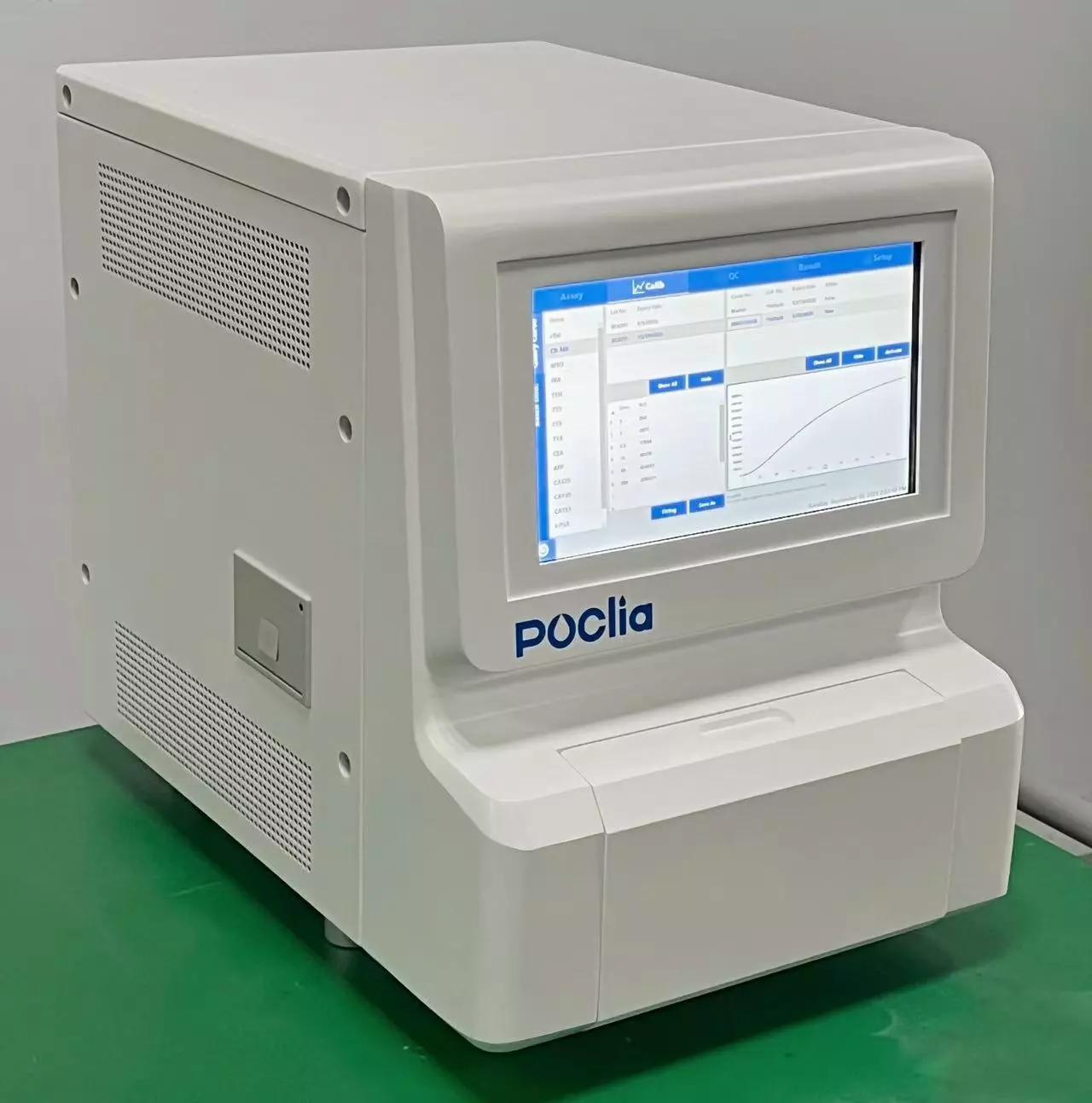
Selecting the right equipment requires moving beyond basic marketing brochures. You need an evidence-based approach to evaluate features. We focus on how specific capabilities translate directly into clinical outcomes.
Device Feature | Clinical Outcome | Operational Benefit |
|---|---|---|
Multiplexing Capability | Run cardiac/respiratory panels from one sample. | Reduces patient draws and saves consumable costs. |
Automated Calibration & QC | Ensures consistent analytical reliability. | Reduces operator hands-on time and compliance gaps. |
Integrated Barcode Reader | Ensures positive patient identification. | Eliminates manual transcription errors entirely. |
Conductivity Checks | Corrects for severe hematocrit variance. | Prevents false results in critical care whole blood. |
Do not buy equipment based on future promises. Vendors often promote assays currently pending regulatory clearance. You must evaluate the currently cleared assay menu exclusively. Compare this menu against your facility's top five diagnostic needs. An analyzer is only valuable if it runs your most frequently ordered tests today.
You must scrutinize analytical performance metrics rigorously. Compare the POC device's coefficient of variation (CV). Assess its limits of detection (LoD) carefully. Benchmark these figures against your central lab's primary chemistry analyzer. You must ensure tight clinical concordance. A reliable immunoassay POCT analyzer should produce results mirroring the central laboratory. Physicians lose trust quickly if decentralized results contradict central lab follow-ups.
Deploying new diagnostic technology introduces significant implementation risks. Regulatory hurdles and data silos can derail your investment. You must proactively address these challenges during the procurement phase.
Determine the CLIA status of your target assays early. Regulatory classifications dictate your staffing requirements. CLIA-waived tests allow operation by medical assistants or nurses. Moderate-complexity tests require specific personnel qualifications. They also mandate rigorous proficiency testing schedules. Many ambulatory clinics lack these administrative frameworks. You must align device complexity with your existing staff credentials.
Manual transcription remains a critical failure point in modern clinics. Typing results manually leads to disastrous medical errors. You must evaluate adherence to established communication protocols. Look for devices supporting HL7 or POCT1-A2 standards.
Assess bi-directional connectivity capabilities thoroughly. Can the device pull patient demographics directly from the ADT feed? Can it push results seamlessly into the EHR? True bi-directional connectivity eliminates manual data entry entirely. It ensures results reach the patient chart immediately.
Look for devices offering mandatory QC lockouts. This feature prevents patient testing if QC fails or expires. It acts as a hard stop against non-compliance. You should also seek automated operator ID tracking. The system must record exactly who performed each test. These tracking features ensure constant audit readiness. Inspectors look favorably upon systems enforcing automated compliance rules.
You need a structured framework to finalize your selection. We recommend categorizing your options based on daily testing volumes. This logic aligns operational capacity with consumable efficiency.
Daily Test Volume | Recommended Device Architecture | Primary Operational Focus |
|---|---|---|
Low Volume (<10 tests/day) | Unit-dose cartridge systems | Preventing reagent waste via long shelf life. |
Moderate Volume (10-50 tests/day) | Multi-test continuous loading platforms | Balancing throughput with moderate footprint. |
High Volume (50+ tests/day) | High-throughput benchtop analyzers | Lowering the cost-per-reportable-result (CPRR). |
Low-volume clinics process fewer than ten tests daily. You should prioritize unit-dose cartridges in these settings. They typically offer extended room-temperature shelf lives. This strategy effectively prevents expensive reagent waste. Moderate or high-volume clinics process far more tests. You should prioritize multi-test platforms for these environments. This architecture lowers the overall cost-per-reportable-result (CPRR). It maximizes efficiency during peak operational hours.
Outfitting an entire health system network requires strategic vision. You should prioritize vendors offering scalable platforms. Seek manufacturers using the same core technology across different device sizes. This standardization simplifies staff training immensely. Nurses trained on a small clinic device can easily operate the larger hospital version. It also streamlines inventory management across multiple sites.
Do not finalize a purchase based on brochures alone. You should initiate specific validation steps.
Request a detailed workflow audit from the vendor.
Require a physical demonstration in your actual clinical environment.
Ask for extensive cross-reference data matching your central lab's specific methodology.
Selecting the right POCT immunoassay platform requires intense diligence. You must look past marketing claims regarding raw test speed. You need to rigorously evaluate sample preparation constraints. Assess operator skill requirements against regulatory frameworks. Verify seamless bi-directional LIS connectivity.
We recommend prioritizing platforms automating daily compliance. Seek out systems featuring strict QC lockouts. Choose devices integrating smoothly into existing clinical pathways. Avoid analyzers requiring staff to invent operational workarounds. A well-integrated system empowers your team to deliver faster, safer patient care.
A: CLIA-waived analyzers perform simple tests with a low risk of error. Medical assistants can operate them without specialized degrees. Moderate-complexity analyzers require stricter oversight. They mandate specific operator credentials, documented training, and regular external proficiency testing to maintain regulatory compliance.
A: Hematocrit variance changes the ratio of red blood cells to plasma. Because immunoassays measure analytes in plasma, abnormal red cell volume skews results. Advanced analyzers use internal algorithms or physical conductivity checks to measure the hematocrit level and automatically correct the final analyte reading.
A: Some devices offer direct HL7 interfaces to the EHR. However, using dedicated POC middleware is highly recommended. Middleware provides centralized fleet monitoring, operator certificate management, and remote QC tracking across dozens of devices, which direct EHR connections typically cannot handle.
A: Shelf life varies by manufacturer and storage condition. Refrigerated reagents often last 12 to 18 months. Room-temperature reagents generally last 30 to 90 days. Low-volume clinics must balance shelf life against daily test volume to prevent costly cartridge expiration and waste.


