Views: 0 Author: Site Editor Publish Time: 2026-09-28 Origin: Site


Primary hospitals face intense operational pressures every day. They must deliver central-lab accuracy rapidly. Patients need quick triage, yet facilities often struggle with limited space and non-specialized staffing. This dynamic forces a difficult balancing act. You need the strict precision of Chemiluminescence Immunoassay (CLIA) technology. However, you also need the agile speed of a point-of-care device. Choosing the wrong equipment leads to severe bottlenecks. It can also cause immense operational strain during peak hours. We created this pragmatic, vendor-neutral framework for lab directors and hospital administrators. It helps you evaluate and select the best POCT CLIA analyzer for your specific environment. We move past basic definitions here. We dive straight into strict procurement criteria. You will discover practical implementation realities. You will also learn exactly how to balance throughput with usability to maximize clinical impact.
Selecting a POCT CLIA analyzer requires balancing time-to-first-result (TAT) with scalable throughput suitable for primary care volumes.
Usability and LIS (Laboratory Information System) connectivity are critical; devices must support compliance and quality control with minimal hands-on time from general nursing or lab staff.
Successful implementation relies on rigorous vendor SLAs (Service Level Agreements) and reliable reagent supply chains.
Primary care settings require a delicate balance of speed and precision. Traditional lateral flow tests provide rapid results. However, they often lack the clinical sensitivity needed for critical acute care decisions. Conversely, central lab systems deliver gold-standard accuracy. Yet they remain bulky, expensive, and require highly specialized operators. Primary hospitals must bridge this specific gap. You need instruments that deliver high sensitivity without the logistical burden of a massive core lab floor plan. The right device transforms a small clinic into a highly capable diagnostic hub.
Defining your target testing volume is your first critical step. Many administrators make the mistake of over-purchasing high-throughput machines. These massive systems sit idle for hours. They waste expensive reagents and valuable bench space. On the other hand, under-purchasing creates dangerous bottlenecks. During peak triage hours, a low-capacity device will delay critical patient care. You must map your historical daily test volumes. Look at your peak hourly demands. Select a device that handles your busiest shift comfortably without sitting dormant the rest of the day.
Your assay requirements dictate your hardware choices. Primary triage handles specific, time-critical events. Suspected cardiac episodes demand high-sensitivity Troponin tests. Severe infections require rapid inflammatory markers like CRP and PCT. Hormonal testing might be necessary for broader diagnostics. Identify the disease pathways most frequently encountered in your facility. Your chosen system must excel in these specific assays. Do not compromise on the critical markers that drive immediate admission or transfer decisions.
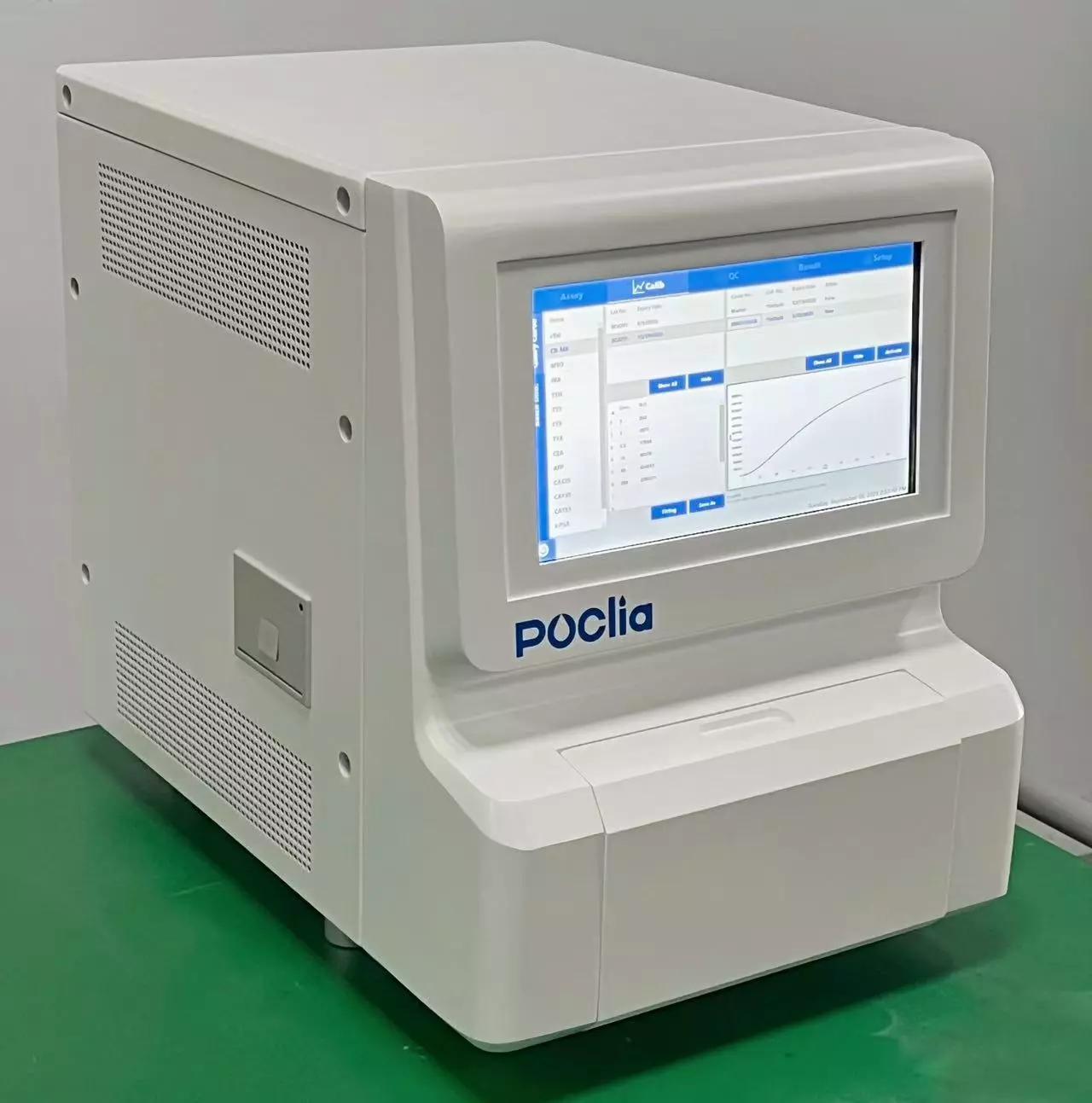
Speed matters in an emergency, but throughput matters for workflow. You must evaluate the true time to first result. Manufacturers often highlight optimal scenarios. However, a realistic 10 to 15-minute turnaround time is the ideal target for acute triage. Next, evaluate the tests-per-hour capability. A rapid first result means little if the machine cannot process a sudden influx of five patients simultaneously. You must ensure the throughput matches your peak emergency room traffic.
Space is a premium commodity in primary hospitals. Central lab analyzers require dedicated plumbing, purified water lines, and complex ventilation. They also demand strict climate control. You want to avoid these costly infrastructure requirements. Look for compact benchtop models. Modern devices operate effectively on standard lab counters. They use self-contained liquid waste management. They plug into standard electrical outlets. This flexibility allows you to place the analyzer exactly where the clinical team needs it most.
Consolidation is a major advantage in point-of-care testing. You do not want multiple disparate devices cluttering your workspace. Ensure your chosen immunoassay POCT analyzer covers all your primary disease pathways. It should seamlessly run cardiac, inflammatory, and metabolic panels on the same platform. A broad test menu reduces staff training time. It also simplifies your supply chain dramatically. One versatile machine is always better than three specialized ones.
Detection sensitivity must meet rigorous clinical guidelines. Acute care decisions rely on accurate data. You must confirm that the device provides a linear range suitable for both low-end detection and high-end saturation. CLIA technology excels here because of its amplified signal-to-noise ratio. Ask the vendor for third-party clinical correlation studies. The results from the benchtop unit must correlate closely with established central lab gold standards.
The table below summarizes how different testing models fit into the primary care workflow.
Testing Platform | Sensitivity | Turnaround Time | Infrastructure Required | Primary Care Fit |
|---|---|---|---|---|
Lateral Flow POC | Low to Moderate | Fast (<10 mins) | Minimal | Good for basic screening only |
Central Lab CLIA | Excellent | Slow (Batching) | High (Water/HVAC) | Poor for urgent local triage |
Benchtop POCT CLIA | Excellent | Moderate (10-15 mins) | Low (Benchtop) | Ideal for acute clinical decisions |
Procurement teams often fixate on the upfront hardware cost. This initial capital expenditure is actually secondary. Your ongoing operational expenditure dictates the real financial impact. A cheap machine often locks you into highly expensive, proprietary consumables. You must forecast the cost of reagents over a five-year period. You also need to factor in the cost of consumable plastics, wash buffers, and substrate solutions. These recurring costs quickly dwarf the initial sticker price of the analyzer.
Waste is the enemy of budget efficiency. You must evaluate the packaging of the reagents. Single-dose packaging works exceptionally well for low-volume primary hospitals. It minimizes spoilage and prevents costly waste. Bulk reagents might offer a lower cost per test on paper. However, if they expire before you use them, your actual cost skyrockets. Analyze your daily test volumes carefully. Choose the packaging strategy that aligns with your actual patient flow.
Always account for the hidden costs of running a lab. Every POC CLIA analyzer requires regular calibration. Frequent calibration consumes costly materials and staff time. Control materials for daily quality assurance also add up rapidly. Furthermore, routine maintenance kits represent a recurring expense. Ask the vendor for a detailed breakdown of all required fluids, controls, and calibration standards. This transparency prevents budget surprises down the road.
Downtime is dangerous in a primary hospital. Your service contract is a vital safety net. Outline exactly what you need in vendor warranties. Look for comprehensive preventative maintenance clauses. Pay close attention to emergency repair commitments. A service level agreement (SLA) must guarantee a swift response. Ensure the contract covers parts, labor, and travel costs for technicians. A robust service agreement protects your operations and secures your investment.
Primary hospitals often run skeleton crews during night shifts. The staff operating the analyzer might not be specialized lab technicians. Therefore, the user interface must be incredibly intuitive. Evaluate the "walkaway time" of the device. The ideal system requires minimal sample preparation. It should eliminate manual pipetting steps entirely. A nurse or general technician should be able to load the sample, press start, and return to patient care immediately.
Human error is a significant risk in fast-paced environments. Automated quality control tracking mitigates this risk. Look for devices with built-in QC fail-safes. The machine should automatically lock out patient testing if calibration fails. It should also track QC lots and expiration dates internally. These automated features prevent erroneous reporting. They also drastically simplify your audit trails when inspectors arrive.
Manual transcription causes dangerous medical errors. Seamless data integration is not optional. Your chosen device must support standard HL7 or POCT1-A2 protocols. This ensures bi-directional communication with your hospital's Laboratory Information System (LIS). When a test finishes, the result should populate the electronic health record instantly. This eliminates transcription mistakes. It also speeds up clinical decision-making by alerting physicians the moment results are ready.
Regulatory adherence protects your hospital's accreditation. The analyzer's design must support local and national regulatory standards. Look for features that align with regional quality assurance protocols. The device should store historical data securely. It must provide easy export options for compliance reporting. A system built with compliance in mind reduces the administrative burden on your lab manager. It ensures you remain perpetually ready for surprise inspections.
Implementation rarely goes perfectly without strict planning. Anticipate realistic rollout risks. IT integration delays frequently stall go-live dates. You must involve your IT department early in the evaluation phase. Inadequate staff training is another major pitfall. A brief one-hour orientation is never enough. Demand comprehensive, shift-spanning training from the vendor. Finally, watch out for post-installation calibration drift. Monitor the device closely during the first thirty days of active use.
A great analyzer is useless without reagents. Primary hospitals in remote or suburban areas face unique logistical challenges. You must assess the vendor's supply chain track record. Do they have local distribution hubs? How reliable is their cold-chain shipping for sensitive reagents? Ask for references from similar-sized hospitals in your region. A trusted vendor will guarantee delivery timelines, even during regional weather disruptions or broader supply chain shortages.
Use a structured approach when narrowing down your vendor options. Follow these specific steps to ensure a rigorous evaluation:
Request third-party clinical correlation studies comparing the POCT device to established central lab analyzers.
Demand a live, in-hospital demonstration or a 30-day clinical trial period.
Verify the specific Service Level Agreement (SLA) response times for technical support in your exact zip code.
Confirm bi-directional IT integration capabilities directly with your current LIS provider.
Analyze the stability and shelf-life of the reagents under your specific storage conditions.
Selecting the best analytical device for your primary hospital dictates your clinical efficiency for years to come. The right device perfectly aligns strict central-lab accuracy with operational simplicity. You must balance turnaround speed with adequate throughput to handle patient surges. Focus heavily on usability, ensuring non-specialized staff can operate the machine safely under pressure. Prioritize robust IT integration to eliminate manual errors and speed up data delivery.
We encourage procurement teams and lab directors to take immediate, structured action. Reach out to your shortlisted vendors today. Demand comprehensive clinical validation data before issuing any final request for proposal (RFP). Insist on live demonstrations within your actual clinical environment. By enforcing these strict evaluation criteria, you will secure a reliable diagnostic partner that truly elevates your primary care capabilities.
A: CLIA offers significantly higher clinical sensitivity and a broader linear range compared to FIA. It produces lower background noise, making it superior for detecting minute biomarker concentrations. FIA devices are generally cheaper upfront but lack the strict precision required for critical acute markers like high-sensitivity Troponin.
A: Yes, many top-tier modern systems accept whole blood samples directly. This eliminates the need for manual centrifugation. Skipping the centrifugation step saves crucial minutes during emergency triage, accelerating clinical decision-making for critical patients.
A: Calibration frequency varies strictly by manufacturer and assay type. It typically ranges from 14 to 28 days, or whenever you introduce a new lot number of reagents. Frequent calibration impacts both consumable expenses and staff workload, making it a vital procurement consideration.


