Views: 0 Author: Site Editor Publish Time: 2026-10-06 Origin: Site


Clinical diagnostics face rising tension today. Modern laboratories and primary hospitals feel immense pressure. They must deliver central-lab-level precision instantly. Yet, they cannot accommodate the massive spatial footprint or turnaround time (TAT) delays of traditional testing systems. This creates a significant operational challenge. Theoretical throughput figures printed on vendor brochures rarely match real-world clinical workflow performance. A high "tests per hour" metric looks impressive on paper. However, it frequently falls short during unpredictable, peak-hour emergency scenarios. This article serves a clear purpose. We provide lab directors and clinical procurement teams an evidence-based framework. You will learn how to evaluate the actual throughput of modern diagnostic platforms. We also explore spatial efficiency and the true workflow impact of these advanced analyzers. You can use this guide to make confident decisions based on clinical reality.
Brochure throughput metrics must be evaluated alongside "time-to-first-result" (TTFR) to measure true clinical utility in urgent care scenarios.
The ratio of throughput-to-footprint is a critical evaluation dimension for decentralized labs and primary hospitals facing space constraints.
Workflow efficiency relies heavily on walkaway time, reagent management, and LIS (Laboratory Information System) integration, not just processing speed.
Adoption risks—such as calibration frequency and operator training requirements—must be factored into the Total Cost of Ownership (TCO).
Many vendors highlight maximum tests per hour as their primary selling point. A high theoretical throughput can easily mislead decision-makers. You must look beyond the brochure numbers. These maximum figures often assume ideal conditions. They assume continuous batching of a single assay type. Real clinical environments rarely operate this way. If a system requires extensive manual sample prep, your actual throughput drops significantly. Preparing samples manually introduces human delays. Batching requirements force operators to wait until enough samples accumulate. This waiting period destroys testing efficiency. You need an analyzer capable of handling random access demands seamlessly. True throughput reflects how many patient samples leave the lab as actionable results within a standard shift.
STAT testing environments prioritize speed for individual critical patients. Bulk processing speeds mean little in an emergency department. Clinicians need answers immediately to make life-saving decisions. This makes Time-to-First-Result (TTFR) a vital metric. A reliable POCT chemiluminescence immunoassay analyzer typically delivers a TTFR of 10 to 15 minutes. Cardiac markers like high-sensitivity troponin demand this rapid turnaround. If an analyzer processes 200 tests per hour but takes 45 minutes for the first result, it fails the STAT test. Emergency teams cannot wait. TTFR dictates patient flow in urgent care settings. Always evaluate TTFR alongside hourly capacity.
Sample loading mechanisms directly impact daily operational throughput. Batch loading systems force operators to pause operations. You must stop the instrument to add new samples or reagents. This creates dangerous bottlenecks during morning rushes. Continuous loading changes the game completely. It allows staff to add urgent samples on the fly. You never have to interrupt an ongoing test run. This capability maintains instrument momentum. Reagents and consumables should also follow continuous loading principles. When you can replace empty reagent cartridges without halting the system, efficiency soars. This distinction separates average workflow from exceptional clinical performance.
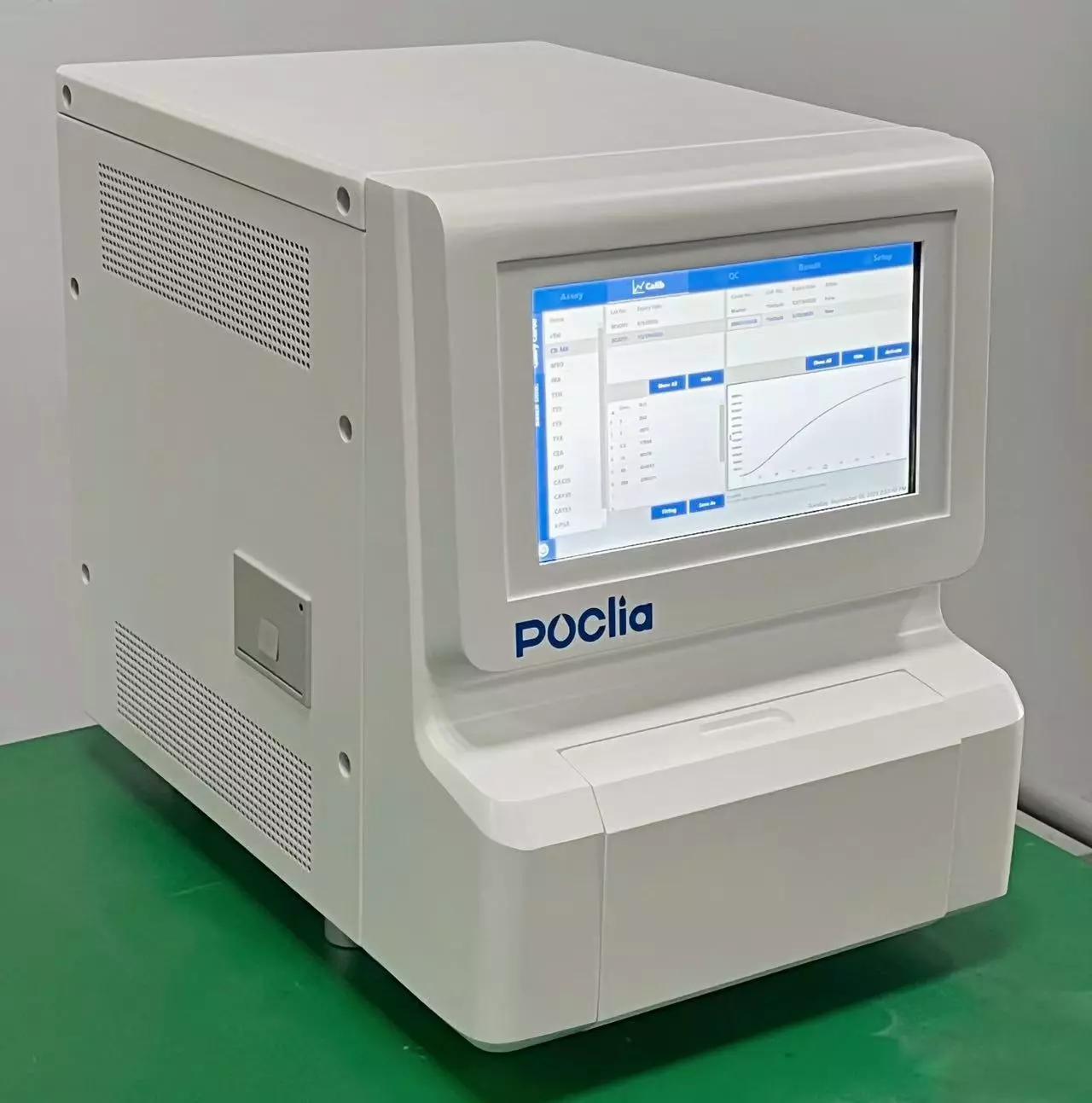
Modern laboratories cannot afford to waste bench space. You need a reliable framework to assess testing capacity against spatial requirements. We call this the footprint-to-throughput ratio. Evaluate how many tests a machine performs per square meter it occupies. Some high-throughput systems demand massive floor space. They require dedicated water lines and specialized ventilation. A modern POC CLIA analyzer genuinely increases testing capacity without dominating the room. It fits comfortably on standard laboratory benches. This compact design does not compromise analytical speed. Assessing this ratio ensures you optimize your physical infrastructure.
Primary hospitals face unique infrastructure limitations. They often lack the square footage of central reference labs. These decentralized environments require a high-density testing approach. You must maximize every inch of available counter space. Bulky equipment disrupts staff movement and workflow. Compact analyzers resolve this spatial tension perfectly. They bring high-end diagnostic capabilities directly to the patient care setting. This spatial efficiency empowers smaller clinics to expand their testing services. Staff can navigate the lab safely and efficiently. High-density design is not just a feature; it is a necessity for decentralized care.
Test menu breadth heavily influences lab organization. Historically, labs needed separate devices for different disease states. You might have one machine for cardiac markers and another for hormones. This approach clutters the laboratory quickly. Combining multiple assay categories on a single platform solves this issue. A comprehensive menu eliminates the need for multiple single-use devices. You can run infectious disease panels, thyroid tests, and cardiac markers simultaneously. Consolidating these tests saves immense physical space. It also simplifies inventory management. Your staff spends less time moving between different instruments.
Automation drastically transforms laboratory workflow performance. Manual sample handling introduces significant risks. Diluting and mixing samples by hand consumes valuable staff time. It also opens the door to human error. Advanced automation minimizes these manual interventions. The system handles pipetting, mixing, and incubation autonomously. Staff can walk away and focus on other critical tasks. Reducing Hands-on Time (HOT) improves staff satisfaction. It also ensures consistent analytical precision across different operators. True walkaway capability remains a cornerstone of efficient diagnostic workflows.
Uninterrupted workflows rely on smart resource management. Poor reagent handling causes frustrating delays. On-board reagent stability ensures assays remain ready for immediate use. You avoid wasting time preparing fresh reagents daily. RFID and barcode tracking eliminate manual data entry errors. The analyzer instantly recognizes lot numbers and expiration dates. Automated inventory alerts warn operators before supplies run out. You never have to abandon a test run due to empty consumables. These features create a seamless, stress-free testing environment.
Calibration procedures can paralyze lab operations if poorly managed. Frequent manual calibrations waste costly reagents. They also cause unexpected downtime during peak hours. Modern platforms utilize automated or extended calibration cycles. Factory-calibrated master curves significantly reduce daily calibration needs. Operators simply run a two-point adjustment periodically. Quality Control (QC) workflows should integrate seamlessly into daily routines. Automated QC scheduling prevents compliance gaps. It ensures the instrument remains analytically valid without interrupting patient testing. Reliable QC protects patient safety and lab integrity.
Table 1: Comparison of Theoretical vs. Practical Throughput Indicators
Metric Type | Theoretical Indicator | Practical Workflow Indicator |
|---|---|---|
Speed | Maximum Tests Per Hour | Time-to-First-Result (TTFR) |
Capacity | Total Reagent Positions | On-board Stability & Auto-tracking |
Operation | Batch Processing Limit | Random Access Continuous Loading |
Maintenance | Listed Routine Tasks | Actual Daily Hands-on Time (HOT) |
Siloed diagnostic data creates severe clinical risks. An analyzer holds little value if it cannot communicate results effectively. Many facilities struggle with improper LIS (Laboratory Information System) integration. Manual transcription of results invites disastrous patient errors. It also delays critical medical decisions. You need robust bi-directional connectivity. A capable immunoassay POCT analyzer must pull patient demographics automatically. It must then push verified results directly to the patient's electronic record. Seamless integration ensures accurate reporting. It also streamlines the billing process by capturing every performed test.
Point-of-care implies simplicity, but reality proves more complex. CLIA technology requires specific handling protocols to maintain accuracy. You cannot assume all staff possess immediate proficiency. Improper sample loading or reagent handling ruins assays. Vendor training support plays a monumental role here. Comprehensive onboarding programs are essential for success. Staff must understand basic troubleshooting and error flag interpretation. Regular competency assessments keep skills sharp. Do not underestimate the learning curve. Prioritize platforms offering intuitive user interfaces alongside thorough clinical education.
Hidden maintenance tasks quietly destroy operational throughput. Daily, weekly, and monthly chores consume hours if poorly designed. You must transparently assess these requirements before adoption. Extensive daily washing protocols delay morning testing schedules. Complicated tubing replacements frustrate operators. Look for systems featuring automated daily maintenance routines. Self-cleaning probes and automated waste management keep the lab running smoothly. When maintenance becomes a burden, staff might skip essential steps. This neglect degrades analytical performance over time. Proactive, automated maintenance safeguards your diagnostic workflow.
Start your evaluation by analyzing historical data. Guessing testing volumes leads to poor equipment choices. Review your specific peak-hour demands accurately. Analyze your clinical case-mix thoroughly.
Calculate average daily test volumes across different shifts.
Identify peak demand windows (e.g., morning rounds or evening ER spikes).
List the most frequently ordered assays in your facility.
Determine expected growth over the next three years.
This data forms your required baseline. It ensures you select an analyzer perfectly sized for your actual workload.
Never assume identical performance based on marketing brochures. You must verify analytical quality independently. Request concrete performance data from the manufacturer. Look for peer-reviewed literature demonstrating strong correlation with central lab systems. Clinical concordance ensures your point-of-care results match traditional methods. Ask vendors for specific correlation coefficients on critical assays like troponin or TSH. Review their precision studies and interference testing results. High-quality diagnostics rely on proven, evidence-based performance. Central lab equivalence is non-negotiable for patient safety.
The relationship with your vendor dictates long-term success. Service-level agreements (SLAs) require intense scrutiny. Hardware will eventually face technical issues. How the vendor responds matters most. Evaluate their guaranteed uptime commitments carefully. Review preventative maintenance schedules to ensure they fit your off-peak hours. Investigate their reagent supply chain stability. Backordered consumables halt lab operations instantly. Look for vendors offering remote diagnostic support. Remote troubleshooting often resolves software errors without an on-site visit. Strong SLAs protect your workflow from unexpected disruptions.
Acquiring a modern diagnostic analyzer is not merely a hardware purchase. It is a comprehensive workflow integration project. You must look past theoretical throughput numbers to understand real-world impact. Ensure your chosen system offers rapid Time-to-First-Result for critical emergencies. Maximize your spatial efficiency by analyzing the footprint-to-throughput ratio carefully. Protect your clinical outcomes by prioritizing walkaway time and automated reagent management. We encourage decision-makers to prioritize platforms where precision meets performance. Analytical quality must never be sacrificed for operational speed. Take action today by requesting a detailed workflow audit from your vendor. Ask for independent clinical validation data. Schedule a live demonstration to see the continuous loading and LIS integration firsthand.
A: The industry standard for a robust system typically ranges from 10 to 18 minutes. This timing varies based on assay complexity. Critical markers like high-sensitivity troponin usually deliver results near the 10-minute mark to support rapid emergency decisions. Routine hormone panels may take slightly longer. Consistently achieving a TTFR under 15 minutes ensures excellent clinical utility in STAT environments.
A: Central lab analyzers focus on high-volume batch processing, often exceeding 200 to 400+ tests per hour. They handle massive, predictable workloads. In contrast, POC systems utilize an on-demand, moderate-throughput design. They typically process 30 to 100 tests per hour. Their architecture prioritizes rapid response times and continuous random access over bulk volume.
A: Yes. Modern compact systems utilize the exact same proven chemiluminescence methodologies found in central labs. They use established technologies like acridinium ester or AMPPD. As long as operators follow strict environmental controls and calibration protocols, these compact systems achieve highly comparable analytical sensitivity and precision.
A: Facilities need stable, standard infrastructure prerequisites. You must install an Uninterruptible Power Supply (UPS) to prevent data loss. Continuous LIS connectivity is mandatory for automated reporting. The lab requires appropriate ambient temperature and humidity controls. Finally, you must establish specific liquid and solid biohazard waste disposal protocols.


