Views: 0 Author: Site Editor Publish Time: 2026-08-08 Origin: Site


Every laboratory faces a delicate balancing act. You must deliver fast diagnostic turnaround times (TAT) alongside strict resource management. Over-specifying an instrument leads to wasted reagents and excessive dead volume. Conversely, under-specifying creates severe clinical bottlenecks during your busiest peak hours. Choosing the right equipment requires matching physical footprint, walkaway automation, and verifiable test throughput to specific facility demands. You must align these technical factors closely.
In this guide, we explore how you can evaluate theoretical speeds against actual operational needs. You will learn how to categorize systems by lab tier and navigate complex implementation risks. We provide actionable steps for mitigating downtime and ensuring smooth software integration. By following this structured evaluation framework, you can confidently select an analyzer perfectly tailored to your patient demographic. Your final decision will optimize both daily operations and long-term scalability.
Base your throughput requirements on peak-hour sample volumes rather than daily averages to prevent workflow bottlenecks.
Factor in real-world operational realities—such as calibration, maintenance, and reagent loading—which reduce theoretical maximum speeds.
Match automation levels to staff availability; a fully automated CLIA analyzer offers high walkaway time, significantly reducing labor costs in high-volume settings.
Evaluate Total Cost of Ownership (TCO) primarily on consumable efficiency and service contracts, not just the initial hardware acquisition cost.
Manufacturers typically state maximum tests per hour under ideal, highly controlled conditions. This theoretical number rarely matches your actual clinical yield. Real clinical settings mix complex panels. They process multiple assay types simultaneously. When you operate an instrument daily, real-world constraints naturally slow down the output. An instrument rated for maximum speeds might only achieve a fraction of that rate during routine operation. Understanding this gap prevents under-sizing your equipment.
Several unavoidable factors reduce your total test yield. Daily calibration protocols consume valuable processing time. Quality control (QC) runs take up sample slots. Wash cycles and complex sample loading mechanisms further impact true output. Each time a technician pauses the system to replenish wash buffers, hourly throughput drops. You must account for these operational variables. A robust evaluation subtracts this necessary maintenance time from the manufacturer's ideal specification.
You need a reliable baseline requirement for your prospective IVD diagnostic analyzer. Never rely on simple daily averages. Instead, calculate your peak-hour sample volume. This approach ensures your laboratory can handle sudden surges without delaying critical patient results. Follow these steps to determine your true operational requirement:
Identify your busiest two-hour sample reception window during a standard shift.
Count the total routine and STAT samples arriving during this specific period.
Multiply this sample count by the average number of individual tests requested per sample.
Divide the final number by two to establish your exact hourly peak demand.
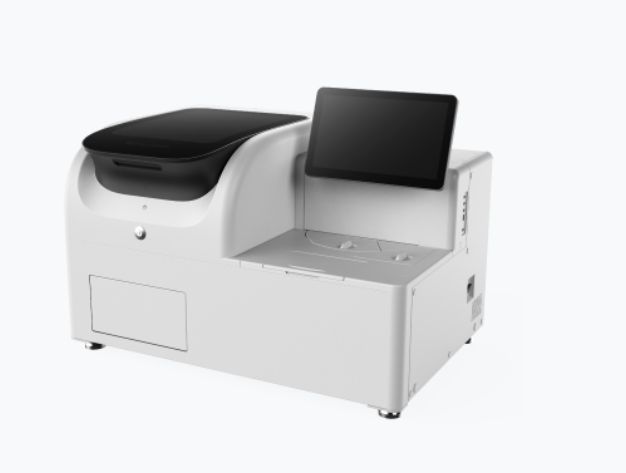
Many specialized clinics operate in environments demanding strict space conservation. However, their sample volumes remain highly predictable. These settings require specific hardware features. Compact, benchtop chemiluminescence immunoassay analyzer models fit perfectly here. They prioritize a minimal physical footprint. They utilize single-dose reagent packaging to prevent unnecessary waste. Generalist staff can operate them easily without intensive specialized training. These systems deliver reliable performance without overwhelming limited utility resources.
Regional facilities often experience steady volume growth. They require a careful balance of processing speed and broader test menu versatility. Moderate walkaway time becomes essential for staff efficiency. Floor-standing models or high-capacity benchtop designs work best for this tier. They feature continuous sample and reagent loading. They also offer STAT prioritization capabilities. This allows technicians to process urgent assays immediately without interrupting the primary batch run.
Central laboratories run continuously. They face severe peak-time surges and process comprehensive diagnostic menus. Technicians handle hundreds of samples simultaneously. These demanding environments require a fully automated CLIA analyzer or scalable track systems. You should focus your search on a dedicated 300 tests/hour analyzer. Look for high onboard reagent capacities and bulk consumable loading features. Maximum walkaway autonomy minimizes technician intervention. It keeps the laboratory functioning smoothly during the busiest shifts.
Lab Tier | Throughput Range | Ideal Form Factor | Key Operational Feature |
|---|---|---|---|
Small Clinics | Up to 100 Tests/Hour | Compact Benchtop | Single-dose reagents |
Regional Labs | 100 - 200 Tests/Hour | Large Benchtop / Floor | Continuous loading |
Central Hospitals | 300+ Tests/Hour | Modular Track System | Maximum walkaway time |
Speed means nothing if the instrument cannot physically operate inside your designated space. You must assess your utility requirements carefully. Does the system need a dedicated Clinical Laboratory Reagent Water (CLRW) supply? Can your facility provide stable electrical power? You must also consider bulk liquid waste management protocols. Furthermore, always verify structural floor-weight limits before installing a heavy hospital laboratory analyzer. Overlooking these structural elements causes severe installation delays.
Utility Category | Evaluation Requirement |
|---|---|
Water Supply | Verify CLRW pressure, filtration needs, and daily volume capacity. |
Power Stability | Ensure dedicated circuits and Uninterruptible Power Supply (UPS) availability. |
Waste Management | Plan routing for hazardous liquid waste and bulk solid biohazards. |
Structural Load | Check engineering specifications for maximum floor weight limits. |
Validate the available diagnostic panels thoroughly. Ensure the analyzer supports tests for cardiac markers, thyroid function, infectious diseases, or oncology metrics. The test menu must align perfectly with your facility's specific patient demographic. A broad, clinically relevant menu reduces the need to send samples to external reference facilities. It streamlines your internal workflows and accelerates patient diagnoses.
Modern diagnostic environments rely heavily on digital communication. Software connectivity prevents dangerous administrative errors. Ensure bidirectional connectivity between the CLIA analyzer and your Laboratory Information System (LIS). This integration automates order entry directly from physician requests. It allows the software to auto-verify results based on predefined clinical rules. Crucially, bidirectional communication completely eliminates manual transcription errors, thereby protecting patient safety.
Successful laboratory managers shift their focus away from initial hardware acquisition. Instead, they examine the lifetime management of consumables, wash buffers, and calibrators. A fast machine processing inefficient test kits wastes significant resources over a five-year lifecycle. You must evaluate how the instrument handles bulk consumables daily. Efficient systems maximize reagent usage and minimize technician interaction time.
Address the hidden burden of dead volume and reagent expiration. When you deploy high-throughput systems improperly in low-volume settings, you encounter significant problems. Large onboard reagent packs often expire before the lab consumes them entirely. This "ghost waste" depletes your operational resources rapidly. Select an instrument offering appropriate pack sizes for your exact daily test volume.
Even the most advanced equipment requires regular maintenance. Evaluate warranty terms and Service Level Agreements (SLAs) closely. Check guaranteed technical response times for your region. Preventative maintenance schedules represent critical operational factors. Fast, reliable service ensures consistent patient testing and maximizes your instrument uptime. Always ask manufacturers for regional service performance data.
Bringing a new clinical instrument online takes considerable time. You must account for extensive parallel testing periods. Clinical validation follows strict industry guidelines, such as those published by the Clinical and Laboratory Standards Institute (CLSI). This validation must occur before an analyzer officially goes live. You cannot rush this phase. Rushing leads to inaccurate patient reporting and compliance violations.
Assess the learning curve for your laboratory staff. They must adapt to new software interfaces. They need to learn updated daily maintenance routines and troubleshooting steps. Proper training prevents early operational errors. Appoint internal "super users" during the initial installation phase. These trained leaders will guide the rest of the team through the daily operational transition.
Physical installation inevitably disrupts normal clinical operations. You must formulate strict contingency plans. Plan how you will handle daily sample loads during the physical installation and calibration phases. Partner with neighboring facilities or rely on backup benchtop instruments. Effective downtime routing guarantees physicians receive critical diagnostic results without interruption.
Selecting the right diagnostic equipment requires a disciplined, multi-dimensional approach. Final decisions must synthesize accurate peak-hour throughput data and strict physical laboratory constraints. You also need a realistic three-to-five-year volume growth projection to prevent early obsolescence. Focus heavily on operational efficiency, software integration, and staff ergonomics.
Your next steps should involve direct manufacturer engagement. Request real-world operational data rather than theoretical maximums. Require a localized operational projection based entirely on your specific test mix and sample volume. Finally, schedule an on-site workflow audit. This hands-on evaluation will confirm whether your shortlisted instrument truly fits your daily clinical environment.
A: Do not rely on daily averages. Identify your busiest two-hour window during a standard shift. Count all routine and STAT samples received during this timeframe. Multiply this number by the average tests requested per sample. Finally, divide by two. This gives you a reliable peak hourly demand. Selecting equipment based on this metric prevents bottlenecks during critical surges.
A: Batch testing requires you to load a specific group of samples and wait for the entire run to finish before adding more. Continuous random access allows you to load new samples and reagents at any time without pausing the system. Random access provides much greater flexibility. It helps technicians manage unpredictable STAT orders alongside routine workflows seamlessly.
A: No. High theoretical throughput simply means the instrument processes many tests per hour in bulk. STAT turnaround time depends heavily on the analyzer's sample prioritization software. It also depends on the specific assay incubation time. An instrument must feature dedicated STAT loading ports and intelligent routing software to truly accelerate urgent diagnostic results.
A: These heavy-duty systems require significant preparation. You typically need a stable clinical laboratory reagent water (CLRW) supply. They require dedicated electrical circuits to prevent power fluctuations. Furthermore, you must provide ample floor space for the main unit, external liquid waste containers, and bulk reagent storage. Always verify structural floor-weight capacities before scheduling the physical installation.


