Views: 0 Author: Site Editor Publish Time: 2026-08-20 Origin: Site


Acquiring a new diagnostic unit represents a high-stakes clinical investment. It directly impacts your diagnostic turnaround time, daily lab efficiency, and critical patient outcomes. We know laboratory managers face overlapping yet distinct operational demands. These demands emerge frequently when handling standard human clinical diagnostics compared to complex veterinary applications. Human labs generally focus on high-volume standardized panels and strict regulatory compliance. Veterinary settings, conversely, must accommodate diverse species ranges and highly unpredictable sample conditions. Navigating these differing requirements requires careful planning and robust evaluation criteria. This guide strips away marketing noise to provide a strictly objective, framework-driven approach. We will help you evaluate your next instrument with clarity and precision. You will discover practical methods to assess throughput, reagent compatibility, and architectural constraints. Ultimately, you will learn exactly how to align hardware specifications with your specific daily testing realities.
Throughput must match reality: Over-specifying capacity wastes capital; under-specifying creates workflow bottlenecks.
Reagent models dictate long-term costs: Closed systems offer operational simplicity and vendor support, whereas open systems provide cost control and testing flexibility.
Human vs. Vet differentiation: Veterinary biochemistry analyzers require species-specific reference ranges and handling for unique sample conditions (e.g., lipemia, hemolysis).
You cannot select appropriate hardware without a rigorous understanding of your baseline workflow. Many lab managers look solely at daily average volumes. This represents a common and critical mistake. Averages hide morning rush hours and specialized testing spikes. You must calculate realistic throughput requirements based on peak loads.
Calculate daily testing volume: Tally the exact number of panels processed during a standard 24-hour cycle.
Identify peak hour bottlenecks: Measure the highest volume of samples arriving within your busiest two-hour window.
Establish required turnaround time (TAT): Define the strict clinical deadlines for reporting results back to physicians or veterinarians.
Meeting peak demand ensures your lab never falls behind during critical hours.
Human clinical diagnostics and veterinary diagnostics demand different hardware capabilities. Human clinical labs focus heavily on high-volume standard metabolic panels. These environments require strict CLIA compliance and comprehensive regulatory audit trails. The equipment must seamlessly process hundreds of uniform human serum samples daily.
Veterinary clinical settings face entirely different hurdles. Animals present immense biological diversity. You need a specialized veterinary biochemistry analyzer equipped with pre-programmed species algorithms. Reptiles, birds, and small mammals yield microscopic sample volumes. The hardware must process these micro-volumes without creating dead-volume waste. Furthermore, veterinary samples frequently suffer from lipemia or hemolysis. The system must adapt to these varied serum qualities automatically.
Define what a successful implementation looks like before inviting vendor pitches. Vague goals lead to poor purchasing decisions. Instead, set measurable operational targets. A successful deployment might reduce manual pipetting steps by 40%. It could achieve 99% verifiable uptime over twelve months. It might lower your overall reagent waste volume. Establishing firm success criteria keeps your evaluation focused on tangible laboratory improvements.
Point-of-care testing systems use microfluidic technology and self-contained reagent rotors. They offer a minimal physical footprint and require virtually zero daily maintenance. These units deliver rapid TAT for acute cases. This makes them highly relevant for emergency veterinary clinics or decentralized human urgent care centers. However, they carry limitations. You face restricted menu expansion capabilities. You cannot easily add novel biomarkers to a locked microfluidic rotor.
Benchtop systems bridge the gap between rapid POCT and massive floor models. Semi-automated systems require technicians to manually mix reagents and incubate samples. This increases labor hours and raises the margin for human error. Upgrading to an automatic chemistry analyzer drastically reduces technician hands-on time. It automates pipetting, mixing, and incubation. This transition minimizes human pipetting errors and frees your staff for higher-level analytical tasks.
High-volume reference labs and large centralized hospitals require floor-standing models. These systems represent the pinnacle of throughput capability. They focus on continuous sample loading. Technicians can add racks of tubes without pausing the analytical process. Floor models feature automated clot detection to prevent probe crashes. They also include robust onboard refrigeration. This keeps bulk reagents stable for extended periods.
Architecture Type | Best Fit Environment | Maintenance Level | Primary Advantage |
|---|---|---|---|
POCT / Microfluidic | ER Clinics, Urgent Care | Very Low | Rapid TAT, zero daily calibration |
Fully Automated Benchtop | Mid-sized Clinics, Regional Labs | Moderate | Reduces manual errors, flexible menu |
High-Throughput Floor Model | Large Hospitals, Reference Labs | High | Continuous loading, onboard refrigeration |
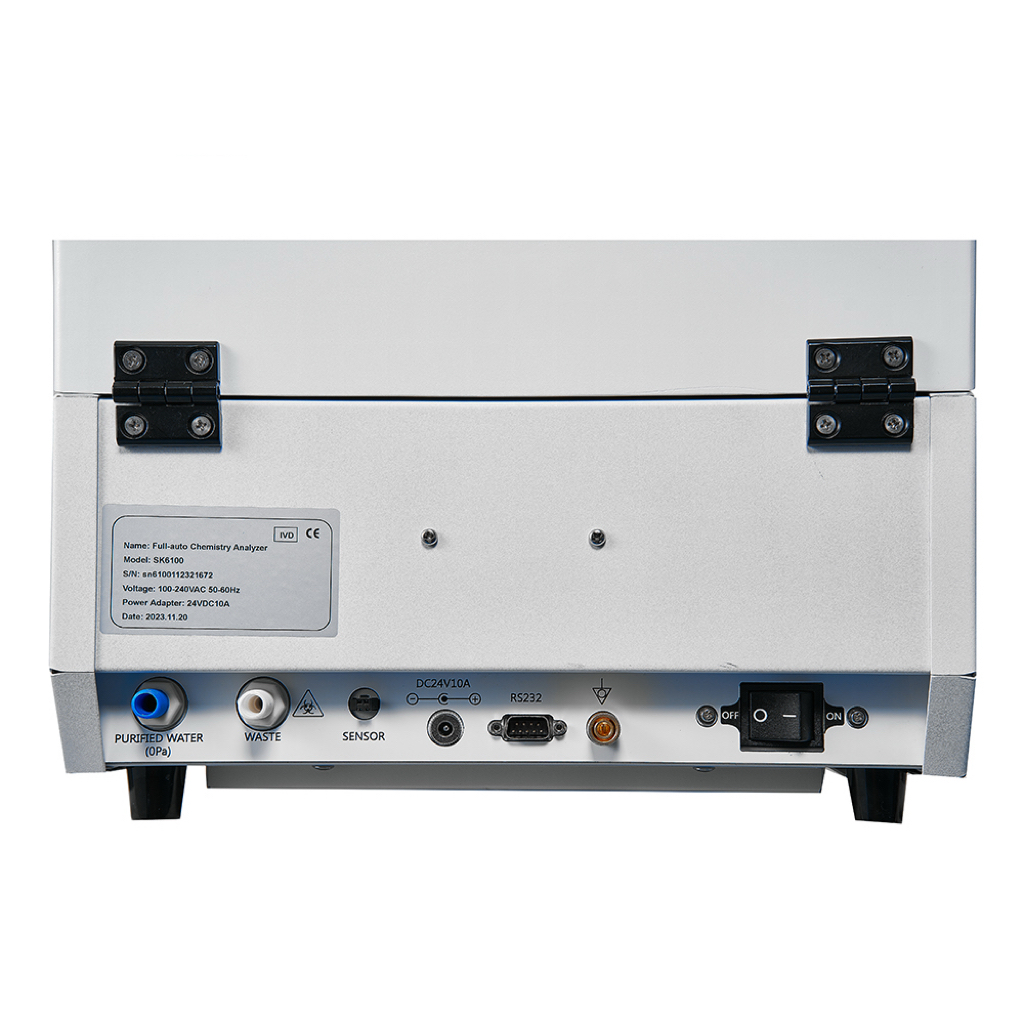
Manufacturer brochures always highlight perfect performance metrics under ideal conditions. You must look beyond these polished marketing materials. Evaluate analytical reliability by reviewing independent validation studies. Search peer-reviewed databases like NCBI for actual Coefficient of Variation (CV%) data. Independent studies reveal how the hardware performs under real-world stress. Consistent precision across diverse patient populations matters more than theoretical maximums.
The reagent ecosystem you choose dictates your long-term operational flexibility. Manufacturers generally offer either closed or open systems. Each carries distinct workflow implications.
Closed Systems: These systems lock you into the manufacturer's proprietary reagents. They guarantee absolute compatibility. Troubleshooting becomes vastly simplified because the vendor controls the entire ecosystem. They also feature barcode-driven inventory management, virtually eliminating reagent mix-ups.
Open Systems: These platforms grant you the freedom to source third-party reagents. You gain immense testing flexibility. You can source specialized niche assays from boutique manufacturers. However, this freedom requires more rigorous internal calibration and validation protocols.
Clinical settings rarely handle perfect, uniform samples. Evaluate the ability of the clinical chemistry analyzer to process diverse biological matrices. A robust system must handle whole blood, serum, plasma, and urine interchangeably. Different matrices require distinct dilution protocols and optical reading adjustments. Verify that the hardware can automatically switch parameters based on the identified matrix type.
Hardware power means nothing if the software creates data bottlenecks. Modern laboratories require seamless Laboratory Information System (LIS) or Hospital Information System (HIS) connectivity. Demand bi-directional LIS integration. Bi-directional communication allows the analyzer to pull patient orders directly from the network. It then pushes the completed results back to the electronic health record (EHR). This automated flow prevents dangerous transcription errors and ensures seamless clinical updates.
Evaluating an instrument requires looking far beyond the initial hardware delivery. You must break down the actual operational resource structure. This includes several distinct components. First, consider the hardware footprint and utility draw. Second, calculate the volume of reagents and consumables consumed daily. Third, review Service Level Agreements (SLAs) for maintenance hours. Finally, track the volume of Quality Control (QC) materials required for daily calibration. Understanding these combined resource drains provides a clear picture of long-term sustainability.
Infrastructure requirements often catch lab managers by surprise. High-throughput units consume massive amounts of deionized water hourly. You cannot run these machines on standard tap water. You must verify your facility can support plumbed deionized water lines. Furthermore, address waste management early. Reagent waste contains chemical preservatives and biological byproducts. Your facility must maintain strict biohazard waste disposal compliance. High-volume systems produce liters of hazardous waste daily.
A sophisticated serum biochemistry analyzer requires extensive technician training. Complex user interfaces increase onboarding time drastically. High staff turnover plagues many modern laboratories. If the software is unintuitive, new operators will struggle. This increases the risk of operator error and compromises patient results. Evaluate the graphical user interface personally. It should feature visual troubleshooting guides and simple, color-coded status indicators.
Every machine eventually breaks down. When it does, every minute of downtime impacts patient care. Frame your evaluation around service reliability. You need guaranteed response times written into your contract. Seek vendors offering secure remote diagnostic capabilities. Remote access allows engineers to fix software glitches instantly without an on-site visit. Investigate regional parts availability. An excellent warranty means little if the replacement parts must ship from across the globe.
Map your current lab processes meticulously before inviting vendor presentations. Vendors excel at steering conversations toward their strongest features. If you map your workflow first, you maintain control of the evaluation criteria. Document every manual touchpoint. Record average pipetting times and daily sample rejection rates. Use this internal audit as your unwavering baseline during negotiations.
Never rely solely on simulated demonstrations. Demand in-lab demonstrations or extended trial periods. You must test the IVD biochemistry instrument using real clinical samples. Vendor-supplied calibration fluids always yield perfect results. Run your own challenging samples. Use hemolyzed, icteric, and lipemic specimens. Observe how the hardware handles real-world biological interference.
Post-installation support separates reliable partners from mere hardware suppliers. Conduct thorough reference checks. Ask current users specifically about post-sale realities. Focus your questions on preventative maintenance adherence. Do the engineers arrive on schedule? Ask about emergency engineering response times during holiday weekends. Genuine user feedback reveals the true nature of the vendor's service department.
A tightly drafted RFP protects your laboratory from future operational headaches. When procuring your next biochemistry analyzer, include highly specific clauses. Mandate guaranteed uptime percentages. Require capped consumable supply agreements to stabilize your long-term inventory forecasting. Define the exact software update life-cycles. You must ensure the manufacturer will support the operating system against emerging cybersecurity threats for the entire operational life of the unit.
Selecting a new analytical platform defines your laboratory's operational rhythm for years. The best analyzer is not necessarily the most technologically advanced machine on the market. Rather, it is the one that perfectly aligns with your specific test menu, daily peak volumes, and staffing realities. Avoid over-specifying hardware that your workflow does not require. Pay close attention to the hidden demands of water consumption, waste management, and software complexity.
Before signing any vendor agreement, take decisive action. Form an internal committee to map your exact peak-hour bottlenecks. We highly encourage lab managers to download a standardized workflow evaluation checklist. Use it to schedule an agnostic workflow consultation. A rigorous, framework-driven approach ensures your next investment drives clinical excellence and daily efficiency.
A: Most modern clinical chemistry analyzers offer a functional lifespan of 5 to 7 years. Hardware components eventually wear down under constant mechanical stress. Additionally, technological obsolescence plays a major role. Manufacturers continually update cybersecurity standards and software protocols, rendering older platforms incompatible with modern hospital networks.
A: Using human equipment for veterinary testing presents severe technical limitations. Human software algorithms lack species-specific reference ranges. Furthermore, human systems generally require larger sample volumes, which are impossible to draw from small exotics or birds. Dedicated veterinary software is essential for accurate diagnostics.
A: A closed system tightly integrates the hardware and the manufacturer's proprietary reagents, offering maximum convenience, barcode tracking, and simple troubleshooting. An open system allows you to source reagents from various third-party suppliers, prioritizing testing flexibility and broader menu expansion over plug-and-play simplicity.
A: You must look beyond the immediate chemical reaction. Combine your total reagent volume usage, consumable consumption (like pipettes and cuvettes), and the specific volume of calibrators and controls required. Divide this combined resource metric by your total number of accurately reportable patient results.


