Views: 0 Author: Site Editor Publish Time: 2026-08-14 Origin: Site


Primary hospitals face intense pressure daily. Clinicians must make accurate triage decisions rapidly. However, they often lack large-scale central laboratory infrastructure. This structural gap causes delays in critical patient care. Enter the POCT CLIA analyzer. This technology bridges a vital diagnostic gap. It combines the rapid speed of Point-of-Care Testing (POCT) with exceptional analytical sensitivity. You get the quantitative accuracy of Chemiluminescence Immunoassay (CLIA) right at the patient side.
Hospital administrators and lab directors need reliable diagnostic tools. Procurement teams must evaluate these devices objectively. This article provides a clear evaluation framework. We will explore how to implement and validate these systems effectively. You will learn about key clinical applications, workflow integration, and strict quality control measures. We will guide you through optimizing decentralized healthcare settings for better patient outcomes.
Clinical Utility: Enables lab-quality quantitative results for critical markers (cardiac, infectious disease, hormones) in 10–15 minutes, directly impacting patient triage.
Operational Shift: Replaces outdated, low-sensitivity rapid tests while reducing reliance on external reference labs.
Evaluation Focus: Procurement decisions should prioritize workflow automation (e.g., whole-blood capability), multiplexing capacity, and stringent quality control (QC) management to ensure compliance.
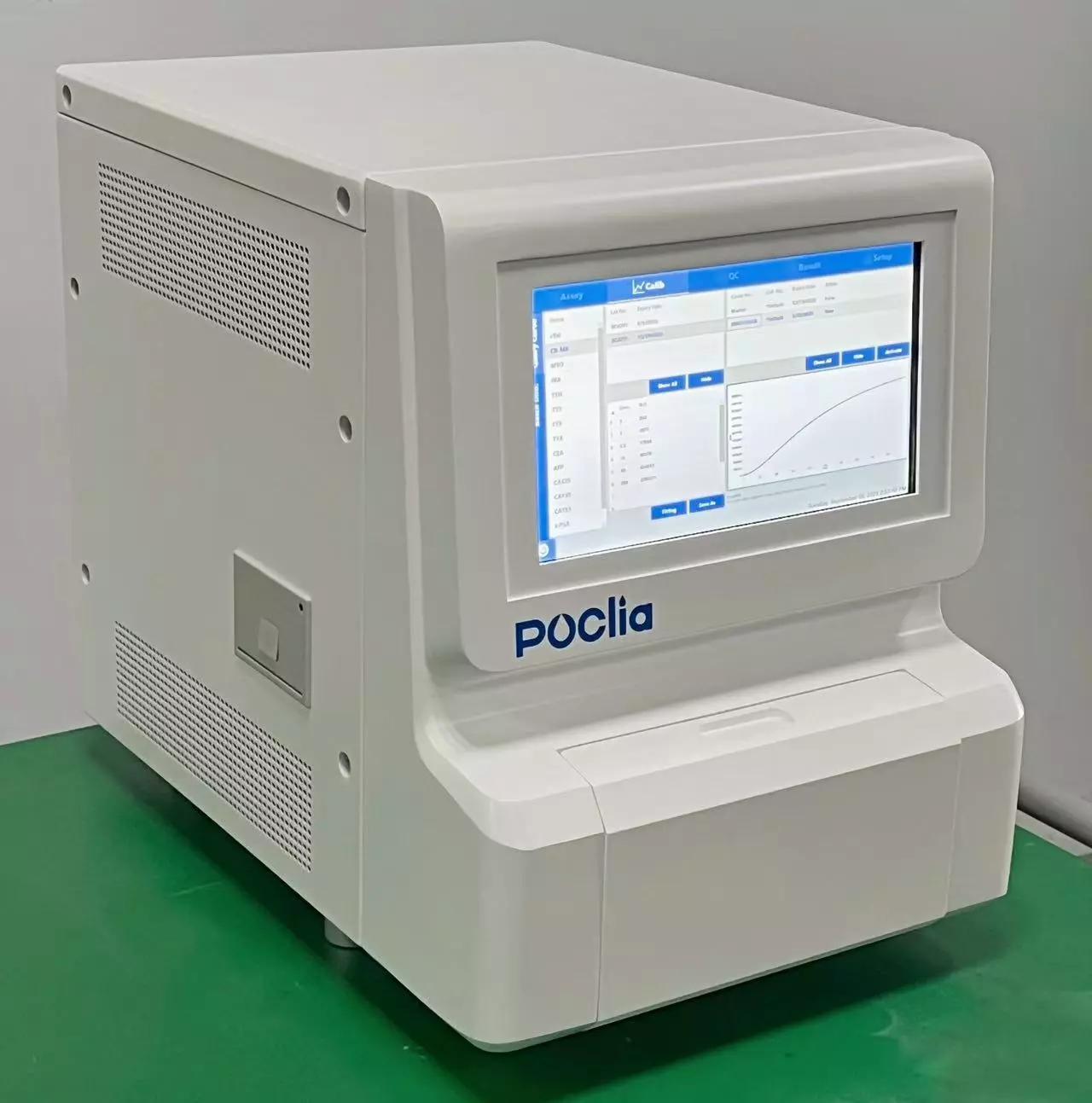
We often see sample transport delays compromise patient care. Using a point of care immunoassay eliminates these logistical hurdles. You bypass the need to send tubes across the campus or to external facilities. The device sits directly near the patient. It matches the analytical sensitivity of large benchtop systems. CLIA technology uses light emission to detect microscopic antigen-antibody interactions. Clinicians receive central lab-quality results instantly. This capability transforms decentralized wards into highly efficient diagnostic hubs. Medical teams gain clinical confidence without waiting hours for essential data.
Patient flow remains a major operational problem. Crowded emergency rooms require fast throughput. Implementing decentralized testing resolves this bottleneck effectively. Clinicians can discharge stable patients much faster. They make accurate referrals to tertiary centers promptly. Acute cases receive immediate intervention. This continuous flow prevents dangerous ward overcrowding. You reduce patient wait times drastically. Better diagnostic speed leads directly to improved patient safety.
New technology must fit into existing clinical pathways naturally. These pathways include emergency rooms, outpatient clinics, and rural health centers. Decentralized analyzers excel in these environments. They do not require highly specialized laboratory personnel. Nurses and medical assistants operate them easily. Cartridge-based testing simplifies the entire process. This reduces the burden on your core lab staff.
The following table illustrates the operational differences:
Workflow Stage | Traditional Central Lab | Decentralized POCT CLIA |
|---|---|---|
Sample Collection | Venous draw, multiple large tubes | Fingerstick whole blood or single small tube |
Processing | Requires centrifugation and aliquoting | Direct loading into the analyzer cartridge |
Transport | Courier or pneumatic tube system required | Zero transport; tested at patient side |
Turnaround Time | 60 to 120 minutes | 10 to 15 minutes |
Chest pain requires instant decision-making. You must measure cTnI, NT-proBNP, and D-Dimer quantitatively. These markers help rule in or rule out myocardial infarctions rapidly. They also detect acute heart failure on the spot. Rapid turnaround saves vulnerable cardiac muscle tissue. You get definitive answers during the critical "golden hour" of patient care. A high-sensitivity troponin assay detects subtle elevations early. This prevents missed diagnoses in atypical cardiac presentations.
Distinguishing between viral and bacterial infections is tough. Clinicians rely on a rapid diagnostic analyzer for clear answers. It tests for Procalcitonin (PCT), C-Reactive Protein (CRP), and Serum Amyloid A (SAA) quickly. You can track inflammation levels accurately. PCT rises rapidly during bacterial sepsis but remains low in viral infections. This guides responsible antibiotic stewardship. We avoid prescribing unnecessary antibiotics. We also ensure septic patients receive aggressive intravenous therapy immediately.
Primary care facilities can expand their services easily. Thyroid function tests (TSH, T3, T4) see high daily demand. Reproductive hormones also require frequent monitoring. You previously outsourced this lab work to reference laboratories. Now, you can run these panels locally. It keeps patient data centralized within your facility. The clinical team manages chronic conditions much faster. Outpatients receive their treatment adjustments during a single visit.
Common clinical markers include:
Cardiac: hs-cTnI, CK-MB, Myoglobin, NT-proBNP, D-Dimer.
Infection: PCT, CRP, SAA, IL-6.
Hormones: TSH, fT3, fT4, β-HCG, FSH, LH.
Metabolic: HbA1c, Vitamin D.
Spatial constraints demand smart equipment choices. You must assess testing volume against available counter space. For example, evaluating whether an 8 channel CLIA analyzer fits your needs. It provides necessary batch-testing efficiency. Yet, it does not demand central-lab real estate. You get high throughput in a compact machine. Some clinics need single-test devices, while busy primary hospitals require multi-channel capabilities.
Reagent management dictates daily operational success. You should compare dry chemiluminescence to traditional wet reagents. Dry reagents use lyophilized active ingredients. They offer a much longer shelf life. They support room-temperature storage. This eliminates strict cold chain requirements. Traditional wet reagents often lead to waste. You must choose a stable technology for clinics with fluctuating volumes.
Every manual step introduces the risk of human error. Review the sample compatibility carefully. An ideal immunoassay POCT analyzer handles fingerstick whole blood directly. It skips serum or plasma centrifugation steps. You also want automated calibration via internal barcodes. This minimizes manual handling time. Operators can load the sample and simply walk away to tend to patients.
Modern clinics run on connected data. You must ensure the system supports seamless integration. Look for standard HL7 or POCT1-A2 communication protocols. The device must connect to HIS or LIS systems instantly. This maintains secure, auditable patient records. You prevent manual transcription errors entirely. Automated result reporting ensures doctors see the data the moment it finishes.
Summary Chart for Procurement Benchmarks:
Evaluation Criterion | Ideal Feature | Why It Matters |
|---|---|---|
Throughput Capability | Multi-channel testing (e.g., 8 channels) | Prevents bottlenecking during peak morning clinical hours. |
Reagent Format | Lyophilized dry reagents | Reduces waste and removes the need for medical refrigerators. |
Automation Level | Direct whole blood loading | Eliminates centrifugation; saves 10-15 minutes of prep time. |
Data Integration | POCT1-A2 / HL7 Compliance | Ensures error-free electronic health record (EHR) updating. |
Historically, doctors viewed rapid tests with skepticism. They doubted POCT accuracy. We must acknowledge and address this concern proactively. You need strict daily and weekly QC protocols. These routines meet local regulatory standards. They also satisfy strict accreditation requirements. Modern software automates many QC lockouts. It prevents operators from running patient tests if external QC fails. This built-in safety net protects clinical integrity.
Common QC best practices include:
Running external liquid controls exactly as scheduled by the manufacturer.
Reviewing Levey-Jennings charts weekly to identify any optical drift.
Implementing automatic software lockouts for unauthorized or uncertified users.
Participating in external proficiency testing (PT) programs quarterly.
User error remains a significant risk factor in decentralized settings. Clinical nurses often operate these devices. They are not certified lab technicians. Therefore, foolproof systems are absolutely mandatory. Cartridge-based systems reduce pipetting mistakes. The analyzer does the heavy lifting internally. You must implement robust, ongoing training programs. We recommend documenting operator competency annually. Hands-on demonstrations ensure staff remain comfortable with the technology.
Start by auditing your current lab requests. Identify the most frequently ordered outsourced tests. Ensure the selected vendor’s test menu aligns with local demographics. You want a device that addresses your specific clinical needs. Do not implement vast test menus you will never use. Focus heavily on high-impact emergency markers and common chronic disease indicators.
Equipment downtime halts patient care. You must evaluate the vendor’s Service Level Agreement (SLA). Look closely at technical support terms. Device replacement must be swift and guaranteed. Reagent delivery must be exceptionally reliable. A broken supply chain causes severe clinical delays. You need a responsive, proven manufacturing partner. Ask for references from similar primary healthcare facilities.
Never implement a system blindly. We strongly recommend requesting an on-site clinical evaluation first. You should run split-sample correlation studies. Take a single venous draw. Run half on the new rapid analyzer. Run the other half on your reference lab machine. Compare the correlation closely. Verify the clinical accuracy firsthand. Ensure the nursing staff finds the interface intuitive. Finalize the procurement only after a highly successful pilot.
Deploying this advanced diagnostic technology represents a major strategic investment. Primary hospitals gain immense clinical confidence immediately. They also achieve superior operational workflow efficiency. These analyzers elevate the overall standard of decentralized patient care. You no longer sacrifice analytical accuracy for rapid speed. The technology brings central lab precision directly to the bedside.
Decision-makers should initiate an internal workflow audit soon. Review your current sample turnaround times closely. Map out the clinical delays caused by external lab processing. Build a definitive operational efficiency case for immediate integration. Take decisive action to empower your clinical teams today.
A: A decentralized unit offers a significantly reduced footprint. It uses single-dose or cartridge-based reagents instead of bulk fluids. You can often test whole blood directly without centrifugation. These systems are optimized for rapid turnaround times. Standard benchtop models focus on high-throughput batching for hundreds of samples.
A: Maintenance is highly streamlined. It features routine daily automated cleaning cycles. Operators only perform periodic optical calibrations. The device requires minimal mechanical maintenance. This contrasts sharply with traditional centralized liquid-handling systems. Those systems require complex plumbing and frequent engineer visits.
A: Yes, it can. The result is definitive provided the device meets standardized clinical performance metrics. It must achieve the required coefficient of variation (CV%) and high sensitivity. The hospital must also maintain strict quality control. Routine proficiency testing protocols ensure the results remain highly accurate and reliable.


