Views: 0 Author: Site Editor Publish Time: 2026-07-22 Origin: Site


Medium-sized clinical laboratories face a specific operational bottleneck every day. They must constantly bridge the gap between low-volume manual processing and the capital-heavy requirements of enterprise-scale automation. Upgrading throughput without inflating reagent waste, increasing downtime, or overwhelming existing laboratory footprints requires precise equipment evaluation. Mismatched systems cause severe workflow delays. They also place unnecessary strain on your highly trained technicians. Striking the perfect balance means looking beyond theoretical maximum speeds. You must understand how an instrument handles your actual, day-to-day operational capacities.
This guide provides a robust framework for evaluating true throughput realities and vital automation features. We will help you navigate the complex process of shortlisting the ideal analyzer for mid-tier laboratory scaling. You will learn how to assess random-access capabilities, connectivity, and reagent efficiency to transform daily workflows. Mastering these core principles ensures smooth operations during peak morning rushes.
Throughput Realities: A "200 tests/hour" rating is a theoretical maximum; actual operational throughput depends on test mix (singleplex vs. multiplex) and random-access capabilities.
Automation ROI: Upgrading to an automatic biochemistry analyzer is justified primarily by increased "walk-away time" and reduced human pipetting errors, not just speed.
Cost Efficiency: TCO calculations must prioritize reagent consumption rates and preventative maintenance schedules over initial hardware acquisition costs.
Integration: Seamless Laboratory Information System (LIS) connectivity and barcode-driven sample management are non-negotiable for scaling medium-sized labs.
Many facilities struggle when moving from semi-automatic processing to continuous-flow operations. A typical mid-sized lab needs a reliable instrument capable of handling 200 to 400 tests per hour. This baseline capacity manages peak morning rushes effectively. It also prevents dangerous delays for critical STAT samples. Finding a high-quality biochemistry analyzer establishes the foundation for this essential operational shift.
Selecting the right processing mode dictates your laboratory's daily rhythm. You must match the machine's processing style to your typical patient influx.
System Type | Operational Mechanics | Best Laboratory Application |
|---|---|---|
Batch Systems | Processes uniform panels in large, uninterrupted sequences. Limits mid-run interruptions. | High-volume uniform testing. Restrictive for facilities needing rapid emergency add-ons. |
Random Access Mode | Allows continuous, uninterrupted loading of samples. Processes mixed workflows seamlessly. | Medium labs handling diverse panels. Ideal for integrating emergency serum or plasma without halting runs. |
Random access mode remains absolutely critical for medium-sized operations. Evaluators should actively test whether a system allows emergency sample loading. Uninterrupted processing prevents bottlenecks when prioritizing critical patient care.
Throughput means very little if it fails to free up your technicians. A machine processing fast but requiring constant supervision creates hidden labor drains. We must evaluate throughput alongside total autonomous operating time. Assess exactly how many hours the system runs independently. Measure the intervals between mandatory reagent top-ups. Track the frequency of required cuvette replacements and waste disposal tasks. Maximizing walk-away time lets your staff focus on complex result interpretation rather than basic machine feeding.
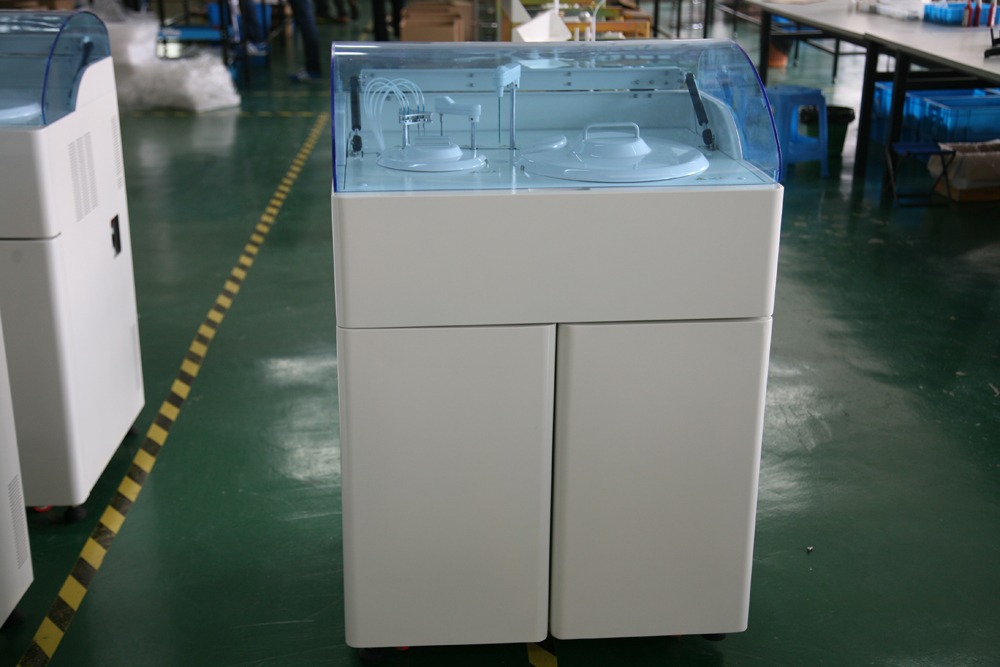
Moving away from manual processing represents a major operational leap. It requires careful planning and acute awareness of laboratory pain points. Upgrading to an automatic biochemistry analyzer solves deep-rooted workflow constraints.
Determining the exact moment to automate requires observing clinical risk indicators. Manual intervention eventually threatens diagnostic accuracy. You must evaluate specific operational factors signaling the need for an upgrade. Watch closely for these clear warning signs:
Rising pipetting error rates during manual sample loading phases.
Noticeable technician burnout during sustained peak morning hours.
Inconsistent turn-around times affecting physician diagnosis speed.
Increasing difficulty managing diverse, multi-panel assay requests simultaneously.
When these issues compound, delaying automation compromises patient safety.
Fully automatic systems drastically reduce variables in sample-to-reagent ratios. Human hands cannot match the micro-level accuracy of automated pipettors. When evaluating new systems, look specifically for automated liquid level sensing. This technology ensures the probe aspirates the exact volume required. Probe collision protection serves as another mandatory feature. It prevents costly physical damage if a sample tube sits incorrectly in the rack. These protective mechanisms guarantee long-term operational uptime.
Many laboratory managers wonder why specific speed ratings dominate the mid-tier market. A 200 tests/hour chemistry analyzer often hits the absolute operational sweet spot. This configuration beautifully balances physical footprint, diagnostic output, and initial budget constraints. It provides enough daily capacity to clear routine panels quickly. More importantly, it offers sufficient overhead for 15 to 20 percent year-over-year volume growth. You secure future scalability without overpaying for enterprise-level redundancy.
Procuring reliable laboratory chemistry equipment demands rigorous technical scrutiny. You must verify that core technologies align seamlessly with your clinical testing menu.
Different clinical panels require distinct analytical approaches. Modern analyzers combine several measurement modalities into a single footprint. Consider these primary technologies:
Photometry and Optical Systems: Assess the analyzer's full range of wavelengths. A robust system typically covers 340nm to 800nm. This optical breadth ensures full compatibility with comprehensive liver, kidney, and lipid panels.
Ion-Selective Electrodes (ISE): Electrolyte testing forms the backbone of basic metabolic panels. Check if the proposed system includes an integrated or modular ISE unit. Direct ISE enables rapid, accurate measurement of vital Na+, K+, and Cl- ions.
Efficient sample handling directly impacts diagnostic flexibility and daily preparation times. Focus strictly on how the machine interacts with biological materials.
Prioritize systems utilizing advanced micro-sampling technologies. High-quality instruments require minimal sample volumes, often below 120 µL. This capability proves essential for pediatric, geriatric, and critical care testing. Extracting large blood volumes from these vulnerable populations is often impossible.
Next, evaluate the on-board refrigeration capacities of the reagent tray. Continuous 24/7 cooling ensures long-term chemical stability. It drastically minimizes daily setup times by allowing reagents to remain securely inside the machine overnight. Finally, barcode integration stands as a non-negotiable requirement. Positive patient identification (PPID) eliminates catastrophic cross-contamination risks. It eradicates manual data entry errors completely.
Understanding consumable consumption prevents long-term budgetary strain. A machine's efficiency relies heavily on how it manages its internal fluids and chemical reserves. Focusing solely on speed metrics ignores crucial daily operational factors.
The choice between open and closed architectures defines your long-term vendor relationship. Each framework offers distinct operational advantages.
Closed systems strictly lock the laboratory into using proprietary manufacturer reagents. These dedicated chemicals guarantee optimized machine reliability. They also simplify compliance tracking for FDA or CE regulatory standards. The standardized approach minimizes daily troubleshooting for your technical staff.
Conversely, open systems allow laboratories to utilize third-party reagents. This architecture provides immense operational flexibility. You can source specialized assays from multiple vendors. However, open frameworks demand highly rigorous in-house calibration routines. Your team must possess the expertise to validate these external assays independently.
You must rigorously scrutinize an instrument's "dead volume" requirements. Dead volume refers to the residual fluid required to prime internal tubing and pumps. This leftover fluid never actually participates in clinical testing. High-throughput machines requiring massive reagent priming can cause severe operational waste. If you run these demanding machines at low capacities during off-peak hours, you will discard expensive chemicals daily. Evaluate priming mechanisms carefully to ensure they match your expected test volumes.
Isolated equipment slows down medical decision-making. Your new serum biochemistry analyzer must communicate effortlessly with existing hospital networks.
Modern laboratories cannot rely on manual result transcription. Evaluate the system’s bi-directional Laboratory Information System (LIS) capabilities. Ensure the machine utilizes recognized HL7 communication protocols. Bi-directional connectivity allows the analyzer to automatically fetch pending test orders. It subsequently posts verified results directly to the patient's electronic health record. This automation significantly reduces administrative bottlenecks.
Reliable diagnostics rely on stringent, daily calibration routines. Assess exactly how the system manages daily quality control tasks. Advanced analyzers automatically generate and monitor Levy-Jennings charts. They instantly flag statistical deviations indicating potential assay drift. More importantly, top-tier systems feature automatic testing halts. If a routine QC sample fails, the machine immediately suspends patient testing. This built-in safeguard prevents the release of inaccurate clinical data.
Unexpected machine downtime devastates laboratory productivity. Industry-leading analyzers now feature intelligent predictive maintenance software.
Predictive Maintenance Monitoring Parameters | ||
Monitored Component | Diagnostic Purpose | Operational Benefit |
|---|---|---|
Internal Pump Pressures | Detects early signs of clogs or micro-leaks. | Prevents catastrophic fluid dispensing failures during high-volume runs. |
Optical Lamp Life | Tracks luminosity degradation over time. | Allows scheduled bulb replacement before photometric accuracy drops. |
Incubator Temperatures | Identifies subtle thermal fluctuations. | Ensures reaction kinetics remain perfectly stable for enzyme assays. |
These built-in diagnostic systems monitor crucial variables continuously. They alert operators to replace degrading parts long before an unexpected breakdown occurs. Scheduled maintenance completely transforms your operational reliability.
Procuring the perfect biochemistry analyzer transforms daily laboratory operations. Medium-sized labs must base their final procurement decisions on a balanced intersection of factors. You should prioritize verified walk-away time, overall reagent efficiency, and robust LIS integration rather than maximum speed alone. An overly fast machine lacking autonomous features simply creates new workflow bottlenecks.
Take concrete next steps to secure the right equipment. Request a 30-day clinical trial to observe the machine handling your unique patient demographics. Analyze the vendor's service-level agreement (SLA) extensively. Aim for guaranteed emergency repair response times under 24 hours. Finally, run a comprehensive workflow simulation using your lab's specific historical test mix. This data-driven approach guarantees you select an analyzer perfectly matched to your clinical environment.
A: Real-world throughput is strictly dictated by your specific test mix. A 400-test machine running complex, long-incubation assays may yield fewer actual results per hour than a 200-test machine running rapid, single-reagent assays. Always evaluate capacity based on your laboratory's most common clinical panels.
A: Yes, if daily sample volumes exceed 50 to 75 patients, or if the lab handles critical STAT orders. Semi-automatic systems quickly become a hidden labor cost at this scale. Automation minimizes human error and significantly improves your overall turnaround time.
A: Calibration frequency depends on specific reagent stability and strict regulatory requirements (like CLIA or ISO standards). However, modern continuous-throughput systems typically require full calibration upon reagent lot changes. They also demand recalibration whenever routine automated QC indicates a statistical drift.


